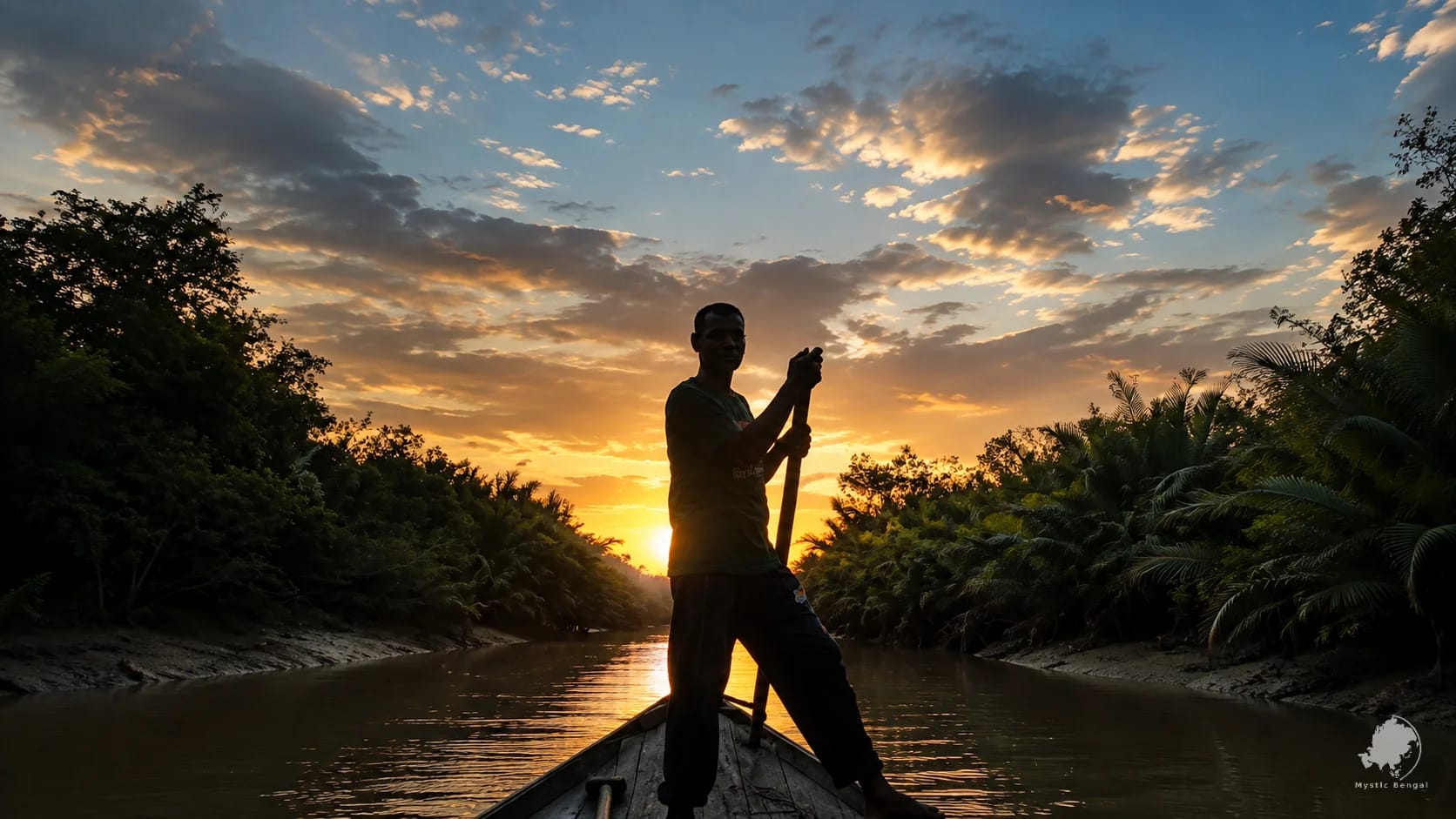
The Sundarbans is the largest continuous mangrove forest on the planet, a 10,000 square kilometre tangle of tidal channels, salt-tolerant trees and mudflats spread across the Bangladesh–India border. About 60 percent of it lies in Bangladesh, and it is the only mangrove forest on earth with a resident tiger population.
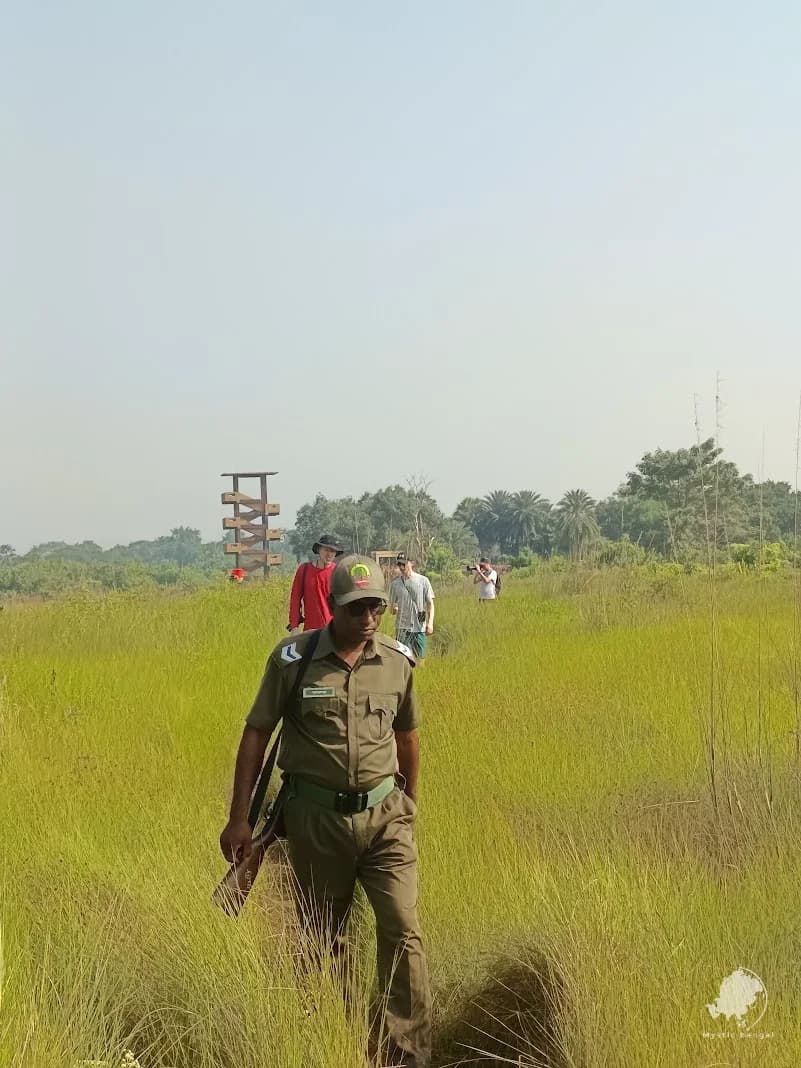
You do not walk into the Sundarbans. You enter it by boat from Khulna or Mongla, sleep on that boat, and spend three or four days moving between watchtowers, canals and forest stations with a Forest Department permit and an armed guard aboard — both mandatory, both arranged before you arrive.
What surprises most people is the quiet. Once the engine cuts and the boat drifts into a side channel, there is nothing but water moving through roots, the tick of crabs on mud, and birds. It is the least crowded place in one of the most crowded countries on earth, and that contrast alone is worth the journey south.
Why the Sundarbans is different
Mangroves grow where fresh water from the Ganges, Brahmaputra and Meghna meets the salt of the Bay of Bengal. Twice a day the tide redraws the map — channels that carried your boat in the morning are mud by afternoon, which is exactly why local boat crews and licensed guides are not optional.
The trees themselves are doing something no other forest does. Sundari, gewa and keora push breathing roots up through the mud in fields of pale spikes, because there is no oxygen to be had below. Walk a forest trail at low tide and you are stepping between thousands of them.
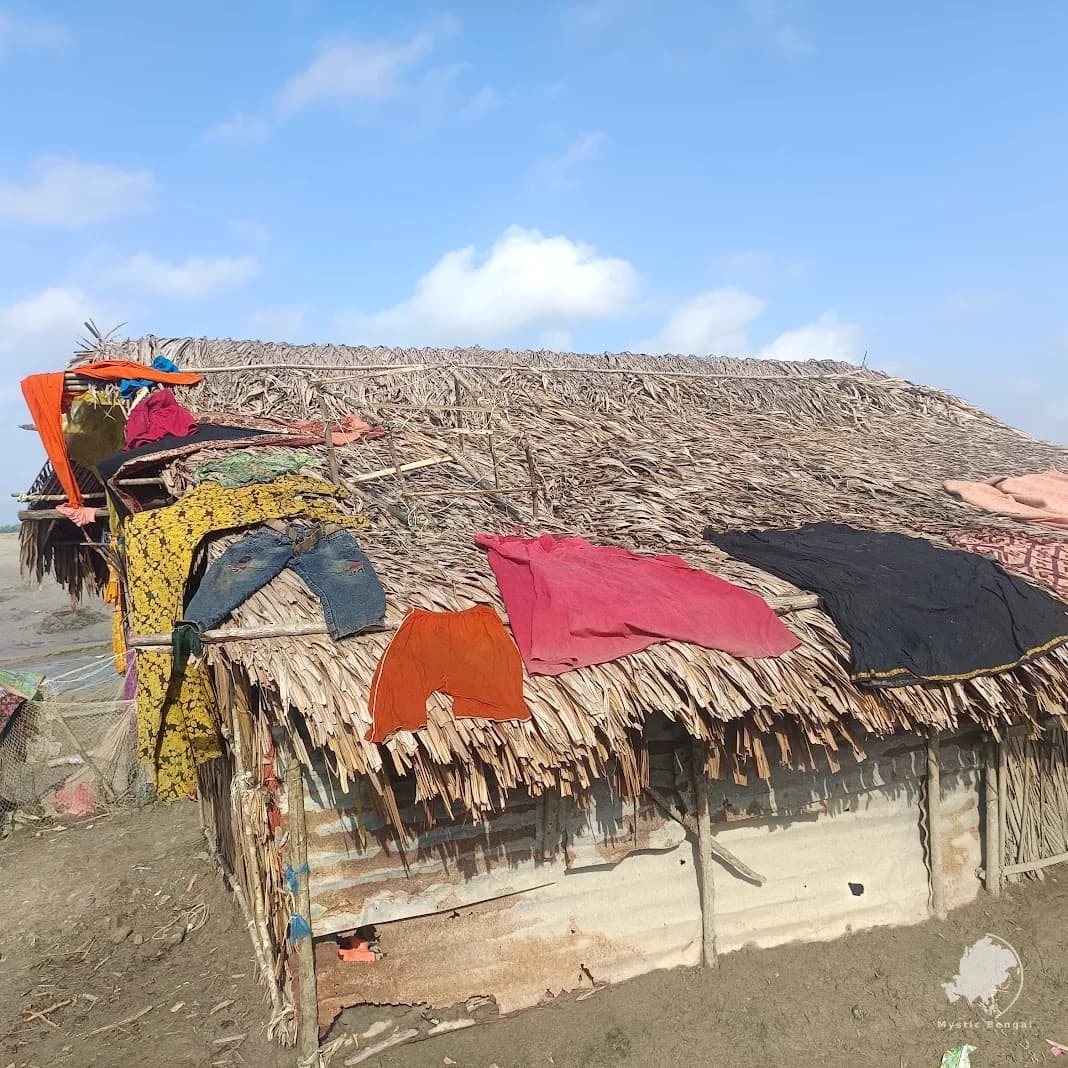
The forest is also a working landscape, and this is the part most itineraries skip. Honey collectors go in each spring under seasonal permits, following wild bees to hives in the canopy. Fishers work the channels with nets strung between poles. Crab catchers wade the banks at low water. Their villages ring the buffer zone, and a good trip shows you both the wildlife and that human edge — because the forest has been feeding people here for as long as anyone can trace.
Wildlife you can realistically expect
Tigers are present but rarely seen. Around a hundred of them range across six thousand square kilometres of dense mangrove, and they are strong swimmers that cross channels at will, which is precisely what makes them so hard to find. Treat any sighting as a bonus, not a plan. What you will almost certainly see instead: spotted deer stepping out onto the mudflats at dusk, rhesus macaques working the tideline, monitor lizards, mudskippers hauling themselves across the flats on their fins, armies of fiddler crabs, and estuarine crocodiles laid out on the banks like driftwood.
Birdlife is the real reward, and it is the reason serious naturalists keep coming back. Six or seven kingfisher species work the same stretch of canal — collared, brown-winged, black-capped, the tiny common kingfisher — along with brahminy kites overhead, lesser adjutants stalking the shallows, herons of every size, and if you are lucky and quiet, the masked finfoot, one of the rarest waterbirds in Asia.
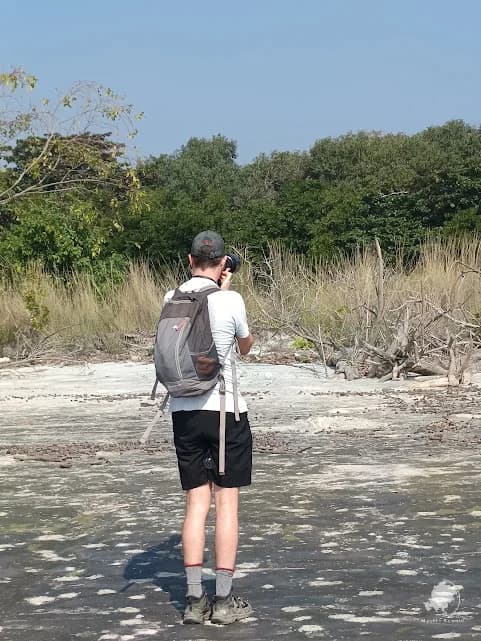
Bring binoculars rather than a long lens if you have to choose. On a narrow canal at dawn, the difference between a good sighting and a missed one is usually magnification, not shutter speed.
- Spotted deer and wild boar at Katka and Kochikhali
- Estuarine crocodiles on the mudbanks near Dublar Char
- Irrawaddy and Ganges river dolphins in the wider channels
- Tiger pugmarks on almost every forest walk
What a typical trip looks like
Most itineraries run three nights and four days from Khulna or Mongla. You board in the afternoon, cruise overnight through the wide channels, and wake somewhere the map has stopped meaning much. The days settle into a rhythm: out at first light in a rowed country boat into creeks too narrow for the mother ship, back for breakfast, a forest walk with the armed guard, an afternoon on deck watching the banks go past, and a watchtower visit at Katka, Kochikhali or Hiron Point before the light goes.
Food, bedding and permits are handled by the operator. Cabins are simple and you will not spend much time in them — the deck is where the trip actually happens, and where you will end up eating, reading and watching for movement on the banks.
Two-night trips exist and are a false economy. A full day of the itinerary is spent simply reaching the interior sanctuary zones, so cutting a night cuts the part you came for.
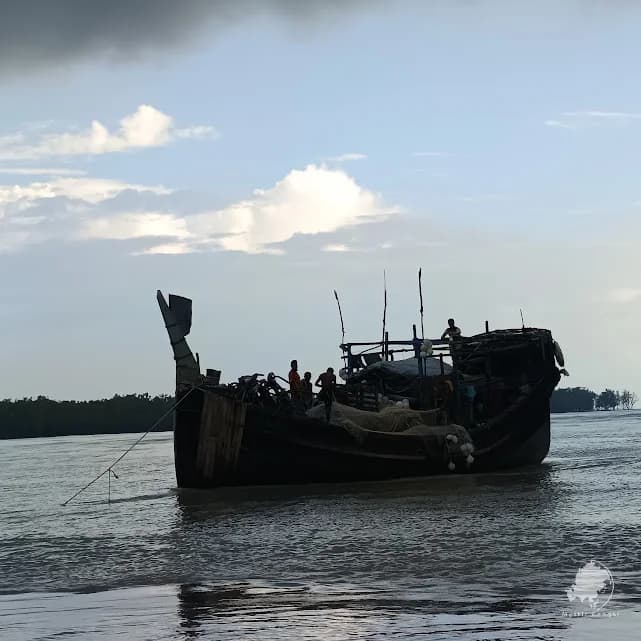
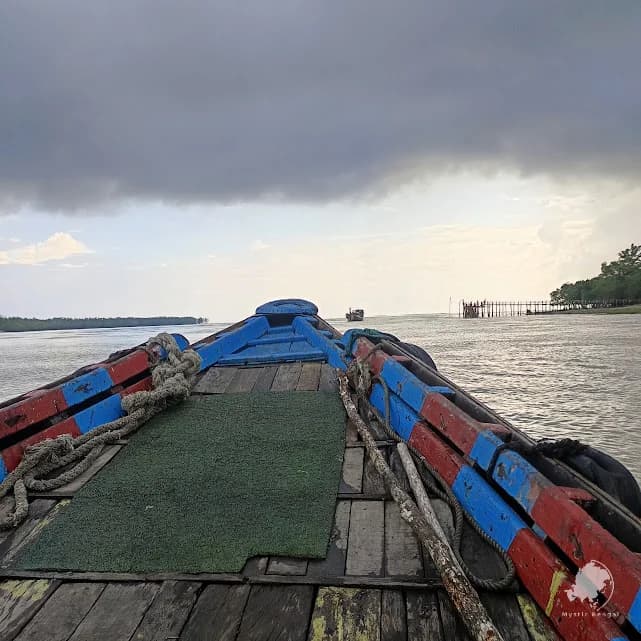
The Sundarbans in pictures

Things to do in The Sundarbans
Dawn canal cruise
Swap the big boat for a rowed country boat and slip into narrow creeks at first light, when wildlife is most active and the forest is silent.
Katka and Kochikhali watchtowers
Elevated platforms over grassland where deer herds graze and tigers occasionally cross at dusk.
Jamtala beach walk
A boardwalk through mangrove to a wild stretch of Bay of Bengal beach, often with fresh tiger tracks on the sand.
Hiron Point (Nilkamal)
A quieter southern station known for deer, crocodiles and excellent birding.
Dublar Char fishing camps
Seasonal drying camps where thousands of fishers work between October and February.
Night sky from the deck
With no light pollution for 50 kilometres, the deck of a moored boat is one of the best stargazing spots in Bangladesh.
Best time to visit
November to February is the season: dry, cool, calm water and the best wildlife activity. October and March still work but are warmer.
Ideal months
When to avoid: June to September, when monsoon rain, rough water and leeches make trips unpleasant and sometimes unsafe.
- Cyclone risk peaks in April–May and October–November; operators track warnings and can reschedule.
- Winter mornings on the water are genuinely cold — bring a fleece.
How to get there
Dhaka to Khulna by road6–7 hours
Air-conditioned coach via the Padma Bridge, then transfer to the boat jetty at Khulna or Mongla.
Dhaka to Jashore by air45 min flight + 2 hours
A short domestic flight, then a two hour drive to Khulna. The fastest option if you are short on days.
Dhaka to Khulna by train8–9 hours
Overnight or daytime intercity service; book Snigdha class for air conditioning and reserved seats.
Boarding the boat
All Sundarbans trips depart from Khulna or Mongla. There is no road access into the forest itself.
Travel tips
- Forest Department permits and an armed guard are mandatory and take days to arrange — book through a registered operator.
- Bring binoculars. At the distances involved they matter more than a long lens.
- Wear muted colours for forest walks and closed shoes for mud.
- Mobile coverage disappears within a few hours of leaving Mongla. Tell people at home in advance.
- Carry cash; there are no ATMs once you leave Khulna.
- Take all plastic back out with you — the forest has no waste collection.
Nearby attractions
Bagerhat Mosque City
1 hour from Khulna
A UNESCO site of 15th century mosques, an easy stop between Khulna and the boat jetty.
Mongla Port
2 hours from Khulna
The second largest seaport in Bangladesh and the usual boarding point for southern itineraries.
Kuakata
A long day by road and ferry
The only beach in the country where you can watch both sunrise and sunset over the sea.
Read the guideThe Sundarbans: common questions
Will I see a tiger in the Sundarbans?
Probably not. The Bangladesh Sundarbans holds an estimated 100+ Royal Bengal tigers across 6,000 square kilometres of dense mangrove, so sightings are rare even for guides who work there year round. Pugmarks, on the other hand, are almost guaranteed.
Do I need a permit for the Sundarbans?
Yes. Every visitor needs a Forest Department permit, and every boat must carry an armed forest guard. Both are arranged by your tour operator days in advance — this is not something you can organise on arrival.
How many days do I need?
Three nights and four days is the standard trip and the shortest that makes sense, because a full day is spent reaching the forest interior. Two-night trips exist but leave you with very little time inside the sanctuary zones.
Is it safe?
Yes, with a licensed operator. Boats carry an armed guard, walks stay on defined routes, and crews know the tides. The real risks are sunburn, dehydration and slipping on mud, not tigers.
What should I pack for a Sundarbans trip?
Binoculars, a warm layer for winter mornings, insect repellent, closed walking shoes that can get muddy, a torch, sunscreen, cash, and any medication you need. Bedding and meals are provided on board.
Where to go next

Chattogram Division
Cox's Bazar
The longest natural sea beach in the world — 120 kilometres of unbroken sand, best experienced away from the crowded main strip.

Sylhet Division
Srimangal
The tea capital of Bangladesh: rolling green estates, seven-layer tea, rainforest trails at Lawachara and the easiest slow days in the country.

Sylhet Division
Sylhet
Shrine city on the Surma river, and the gateway to Ratargul swamp forest, Jaflong stone beds and the haor wetlands of the northeast.
Travel to The Sundarbans with a local team
We handle permits, transport, guides and the timing that makes the difference between a good trip and a wasted one.
Sources and further reading
- The Sundarbans — World Heritage List — UNESCO World Heritage Centre
- Sundarbans Reserved Forest — Ramsar Site no. 560 — Ramsar Sites Information Service
- Sundarbans — Wikipedia