
Barisal is where the delta stops being scenery and starts being infrastructure. Canals run behind the houses instead of lanes, the boat is the family car, and in the villages south of the city there are markets that have never been held anywhere except on the water.
Getting there is half the reason to go. The overnight launch from Sadarghat in Dhaka is a triple-decker riverboat that leaves around sunset and ties up in Barisal at dawn, and a cabin on the top deck costs less than a mid-range hotel room. People fly now that the Padma Bridge has cut the road time, which is a shame — the launch is the trip.
Most visitors give the region two or three days. One for the floating markets at Bhimruli and the guava canals, one for the city and Guthia, and a third if you are carrying on south to Kuakata.
The floating guava markets
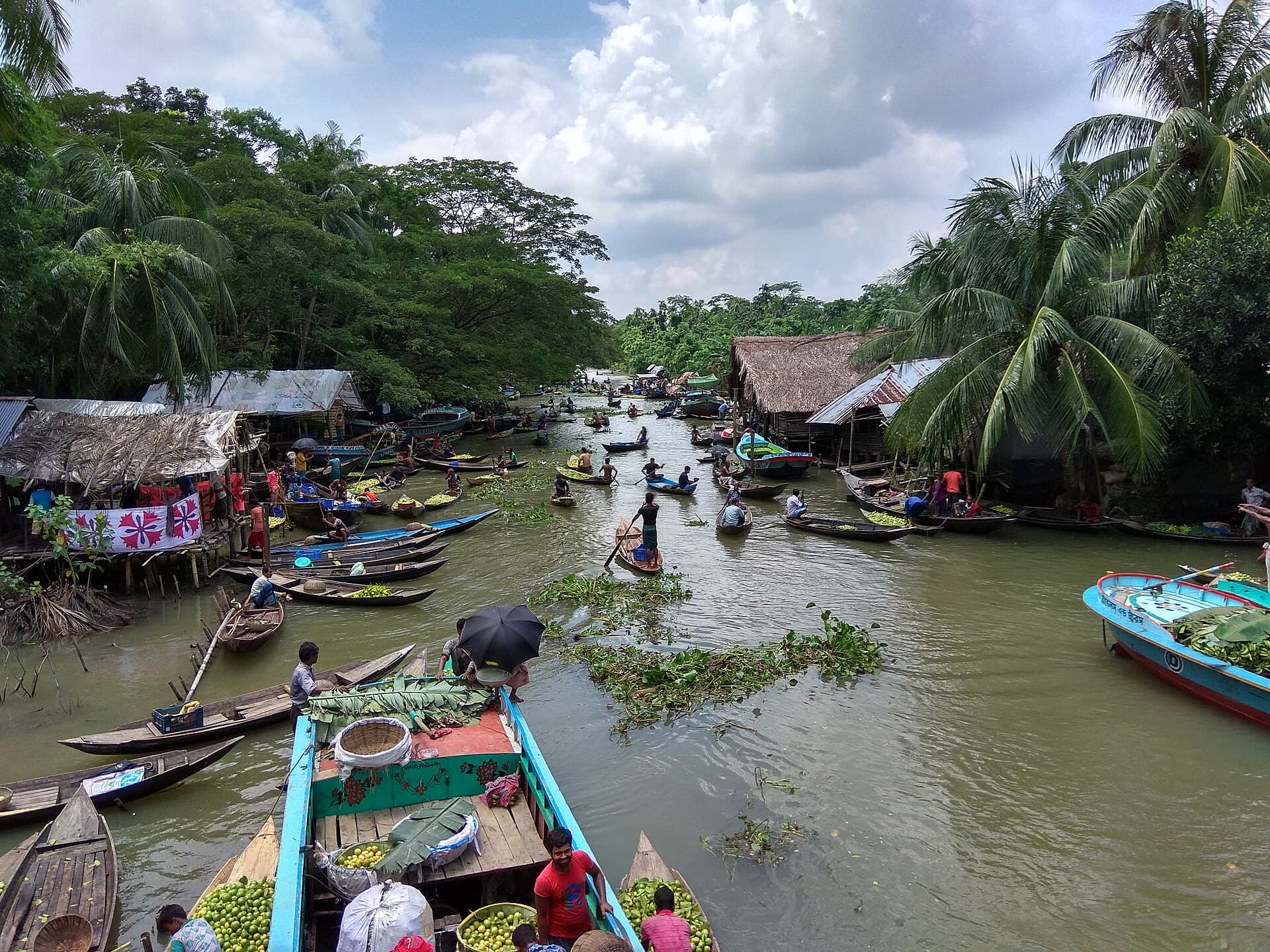
About forty kilometres from Barisal city, where Jhalokathi, Pirojpur and Barisal districts meet, three canals converge at a village called Bhimruli. Every morning in season, growers row in from the guava orchards along those canals with their boats loaded to the gunwales, and the whole market happens on the water — buyers in bigger boats, sellers in smaller ones, money and fruit going hand to hand across the sides.
It is not staged for anyone. This is how the crop actually gets sold, because there is no road that reaches the orchards. The season runs roughly July to September, peaking in August, and the market is finished by nine in the morning — which means leaving Barisal before five.
The orchards themselves are the other half of the day. Hire a small boat at Bhimruli and spend an hour or two paddling the narrow guava canals at Atghar Kuriana and Dumuria, where the trees lean in over the water from both banks. In the same weeks the Kuriana and Banaripara markets deal in guava saplings rather than fruit, which is worth seeing if you have the time.
Coming down by launch
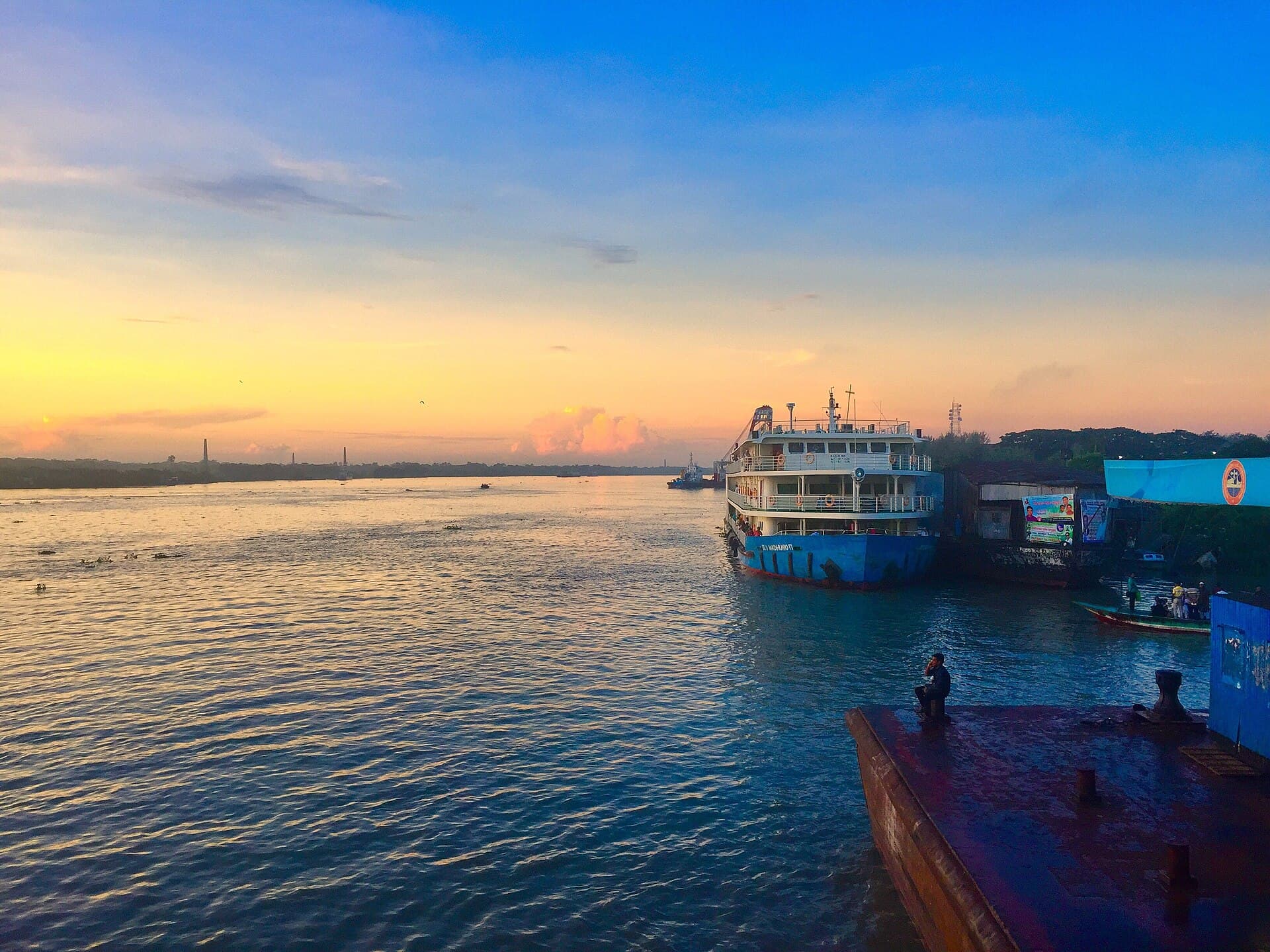
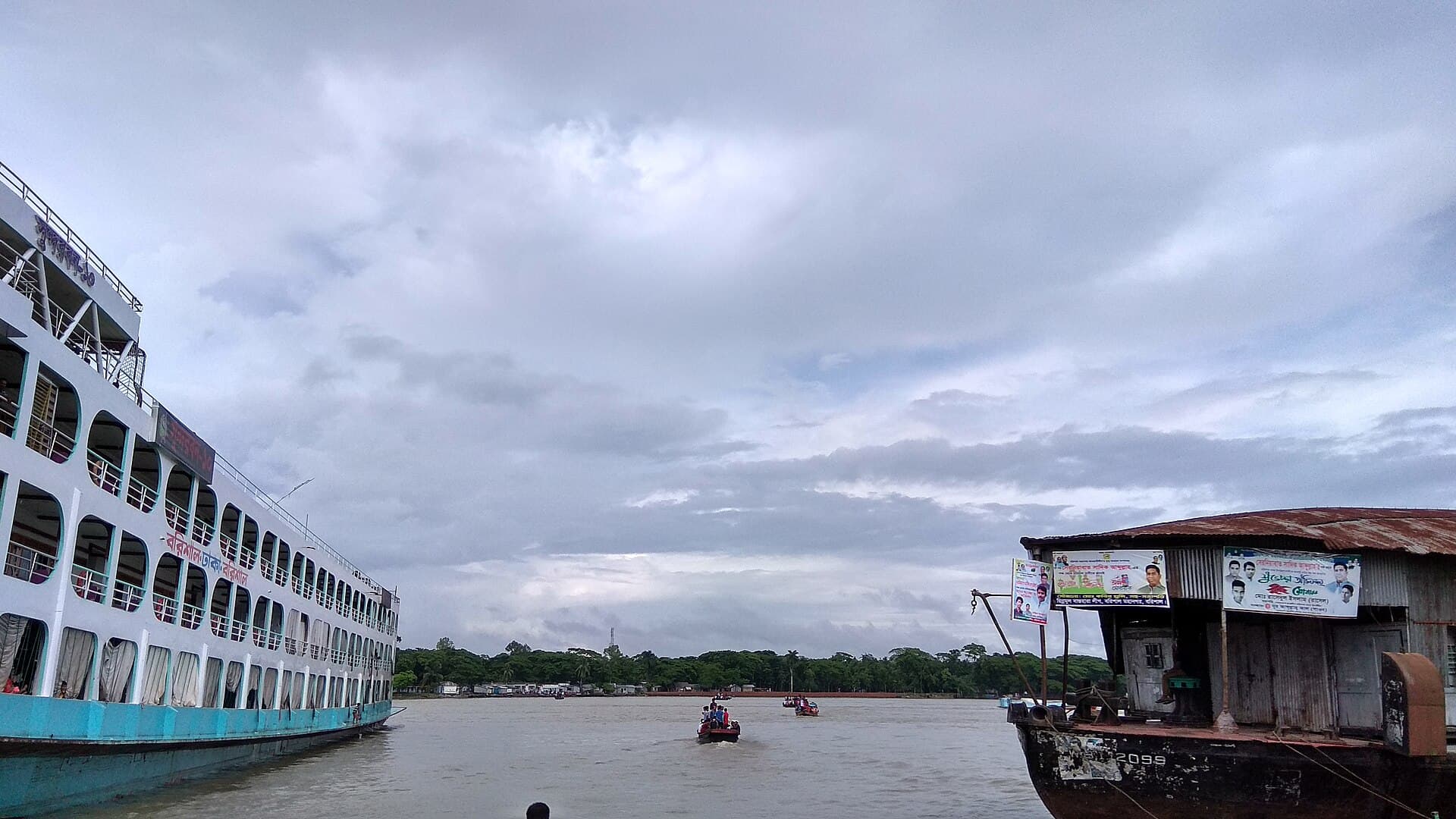
The Dhaka to Barisal launches leave Sadarghat in the late afternoon and arrive between five and six the next morning. The old rocket paddle steamers have gone, but the big triple-deckers that replaced them are an experience in their own right: first class cabins on the top deck, a deck-class floor below where several hundred people spread out mats for the night, and a canteen that does rice and fish until late.
Book a cabin a day or two ahead in season and take the front-facing ones if you can. What you are paying for is the hour after departure, when the boat clears the Buriganga and the light goes, and the hour before arrival, when it comes up the Kirtankhola through the fishing boats.
The Padma Bridge has made the road trip much faster — five or six hours by coach — and most Bangladeshi travellers now drive. Fly if you are short of time, but the launch is the better story.
Guthia Mosque, Durga Sagar and the city
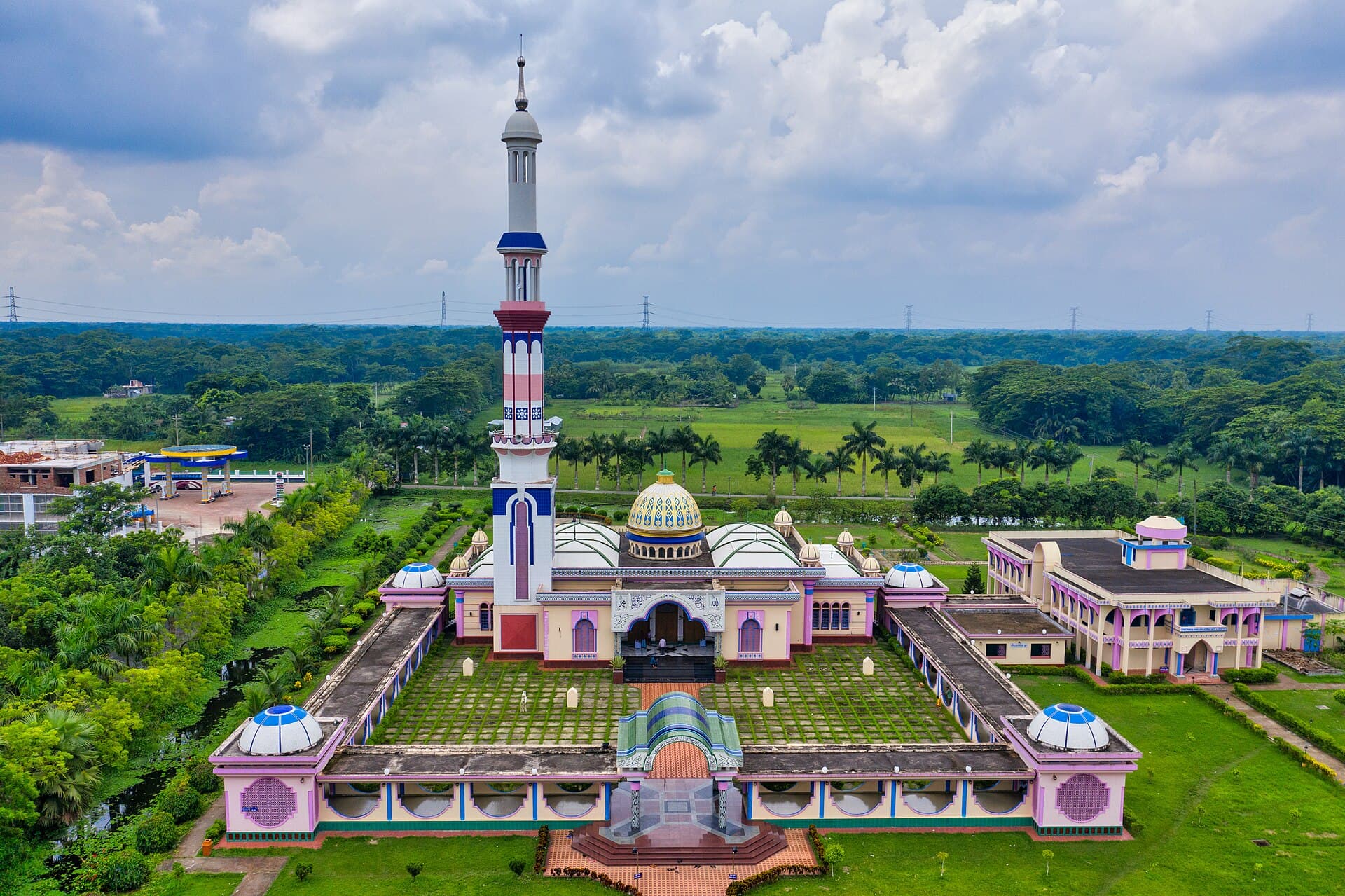
Baitul Aman Jame Mosque at Guthia, about twenty kilometres north of the city, is new — built in the early 2000s by a local businessman — and enormous, sitting on fourteen acres with a lake, gardens and a graveyard. Purists will tell you it is not historic. Go anyway; it is the most striking piece of architecture in the division, and on Friday it fills.
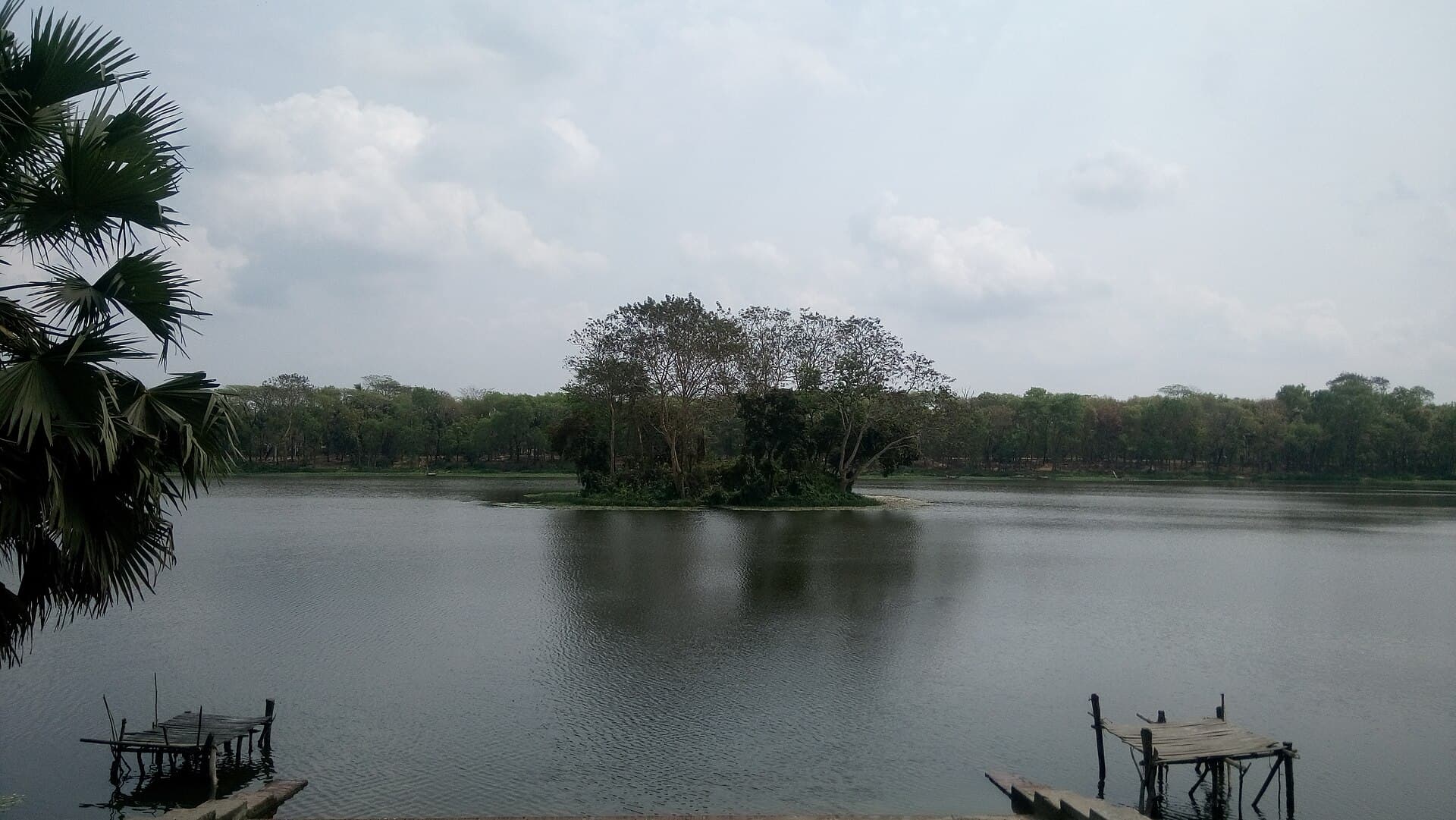
Durga Sagar at Madhabpasha is older and quieter: a tank of around 2,500 metres’ perimeter dug in 1780 by the widow of the Chandradwip raja, with an island in the middle and a walking path around the bank. Migratory ducks use it in winter.
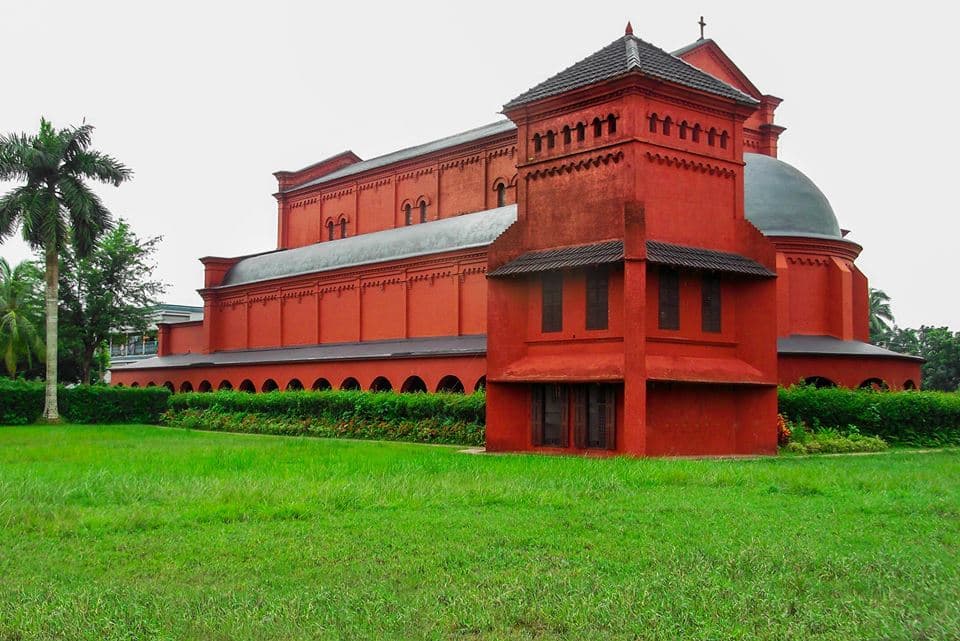
In the city itself, the Oxford Mission Church of the Epiphany is the building to find — a red-brick Anglican church consecrated in 1907, with an unusually tall nave and a large garden compound that is one of the few genuinely still places in Barisal. Add the Lakutia zamindar bari north of town if you have an hour spare, though it is largely ruins.
Barisal in pictures
Things to do in Barisal
Bhimruli floating market
Three canals meeting at a village, and a guava market held entirely in boats. Leave Barisal by 5am; it is over by nine.
Paddle the guava canals
Hire a rowing boat at Atghar Kuriana or Dumuria and drift through orchards where the trees close over the water.
Overnight launch from Dhaka
A triple-decker riverboat down the Meghna and up the Kirtankhola. Book a top-deck cabin and stay outside for the first hour.
Guthia Mosque
Fourteen acres of white domes, lake and gardens twenty kilometres north of the city.
Durga Sagar
A 1780 tank with an island at its centre and a shaded path around the bank, busy with winter ducks.
Oxford Mission Church
A 1907 red-brick Anglican church with a quiet walled garden in the middle of the city.
Kirtankhola at sunset
Take a country boat out from the launch ghat for an hour as the Dhaka boats are loading.
Sapla Bil, Satla
In August and September a wetland covered in red water lilies, about two hours from the city. Go at sunrise.
Best time to visit
Two answers. July to September for the floating markets and the water lilies, accepting rain. November to February for comfortable weather, accepting that the guava season is over.
Ideal months
When to avoid: April to June is hot and humid with nothing in season. Cyclone risk runs highest in April–May and October–November, and launch services can be suspended at short notice.
- August is the peak of the guava harvest and the single best week to be at Bhimruli.
- Red water lilies at Satla appear in the same monsoon window, roughly August to September.
- Check launch schedules during storm warnings; services stop when signals go up.
How to get there
Dhaka to Barisal by launch10–12 hours
Overnight triple-decker from Sadarghat, leaving late afternoon and arriving at dawn. Cabins should be booked ahead in season.
Dhaka to Barisal by road5–6 hours
Air-conditioned coach over the Padma Bridge. Much quicker than it used to be, and the usual choice for Bangladeshi travellers.
Dhaka to Barisal by air35 minutes
Short domestic flights into Barisal airport, 8 km from the city.
Barisal to Bhimruli1.5–2 hours
Hired car or CNG to Jhalokathi and then a boat, or a boat the whole way if you want the canals as well.
Onward to Kuakata3–4 hours
Road south through Patuakhali. An easy add-on if you are already this far down the delta.
Travel tips
- For Bhimruli you have to leave in the dark. Arrange the car and the boat the night before, not on the morning.
- Negotiate the boat hire before boarding, and agree how many hours you want.
- The canals are shallow and the boats are small; pack your camera gear in something waterproof.
- Monsoon means rain in the guava season. Bring a dry bag and expect to get wet.
- Cabins on the Dhaka launch sell out on Thursday and holiday sailings — book early.
- Cover your head and shoulders at Guthia Mosque, and remove shoes at the entrance.
- ATMs are reliable in Barisal city and scarce once you are out among the canals; carry cash.
Nearby attractions
Kuakata
3–4 hours by road
The beach where you can watch sunrise and sunset over the same sea, straight south.
Read the guideThe Sundarbans
6–7 hours by road
The mangrove forest, reachable west via Khulna and Mongla.
Read the guideSatla water lily wetland
2 hours from Barisal
Red lilies across a shallow bil in the monsoon months, at its best just after dawn.
Historic Dhaka
Overnight by river
Where the overnight launch starts, at Sadarghat on the Buriganga.
Read the guideBarisal: common questions
When is the Barisal floating guava market open?
The season runs from roughly July to September, peaking in August, because that is when the guava crop comes in. Outside those months the canals are quiet and there is no market to see. It also finishes early — trading is done by about nine in the morning, so you need to leave Barisal city by five.
Where exactly is the floating market?
The best known is at Bhimruli, in Jhalokathi district, about 40 kilometres from Barisal city where three canals meet. Related markets at Atghar Kuriana, Kuriana and Banaripara deal in guava saplings rather than fruit, and the orchard canals between them are worth a couple of hours by rowing boat.
Is the overnight launch from Dhaka to Barisal safe?
Yes, on the main operators. The large triple-deckers run a fixed schedule and are well used by ordinary travellers. Take a first class cabin, keep your valuables with you rather than in the cabin when you go up on deck, and check whether any storm signal has been raised before you sail — services are suspended when they are.
How long does the launch take?
Ten to twelve hours. Boats leave Sadarghat in Dhaka in the late afternoon and tie up in Barisal between five and six the next morning, so you sleep through most of it and wake for the run up the Kirtankhola.
Is Guthia Mosque worth visiting if it is not historic?
Yes. It was built in the early 2000s, so it has no age to it, but the complex covers fourteen acres with a lake and gardens and it is easily the most impressive piece of architecture in the division. Visitors of any faith are welcome outside prayer times.
How many days do I need in Barisal?
Two full days covers the floating market, the guava canals, Guthia and Durga Sagar. Make it three if you are arriving by launch and want a slow first morning, or if you plan to carry on to Kuakata afterwards.
Where to go next
Dhaka Division
Historic Dhaka
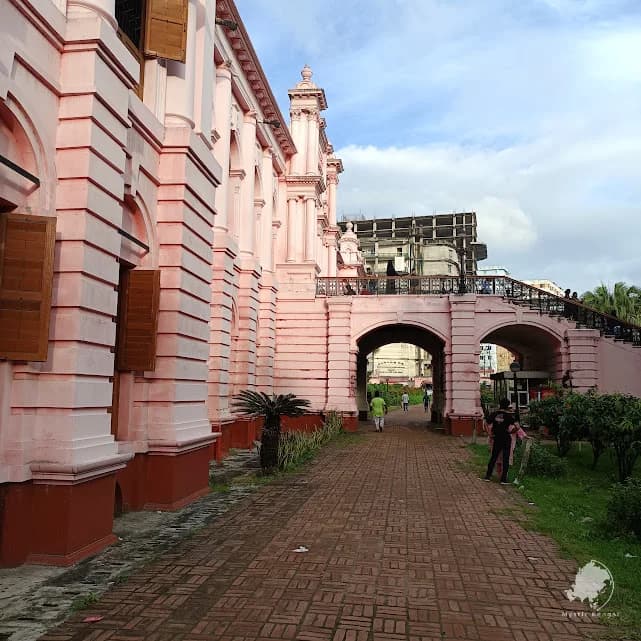
Mughal forts, a pink riverside palace, a mosque covered in Japanese china, and the busiest river port in the country — most of it inside three square kilometres of Old Dhaka. Two days, done on foot and by rickshaw.
Khulna Division
The Sundarbans
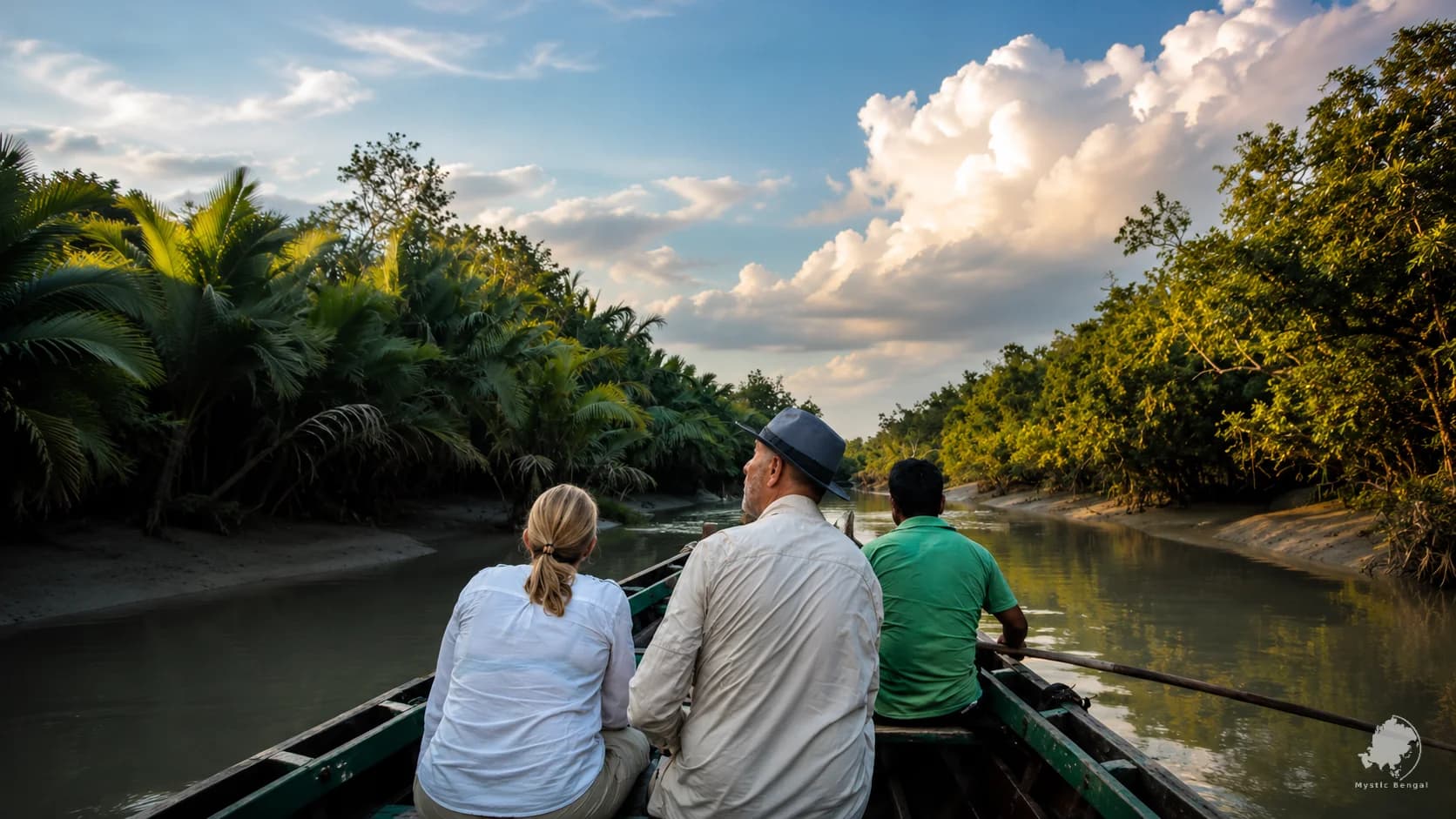
The largest mangrove forest on earth, and the only one where tigers swim between islands. Three nights on a live-aboard boat is the way to see it.
Chattogram Division
Cox's Bazar
The longest natural sea beach in the world — 120 kilometres of unbroken sand, best experienced away from the crowded main strip.
Travel to Barisal with a local team
We handle permits, transport, guides and the timing that makes the difference between a good trip and a wasted one.
Sources and further reading
- Barisal — Wikipedia
- Baitul Aman Mosque — Wikipedia