Most people arrive in Dhaka, look at the traffic, and try to leave. That is a mistake. The old city south of the Buriganga has four hundred years packed into a few walkable blocks — a half-finished Mughal fort, a nawab’s palace the colour of rose sherbet, mosques with Japanese porcelain pressed into their walls, and an Armenian churchyard that has outlived the community who built it.
None of it is far apart. Lalbagh to Ahsan Manzil is a twenty minute rickshaw ride, and Star Mosque and the Armenian Church sit within a few hundred metres of each other in Armanitola. What eats your time is the traffic, not the distance, which is why doing Old Dhaka on foot with a rickshaw for the longer hops beats any car.
Give it two days. One for the old city, one for Shahbagh and the National Museum, which is where the loose ends of everything you saw downtown get explained.
Ahsan Manzil, the Pink Palace
You will see the dome before you see the building — it sits right on the Buriganga, and the pink is not subtle. The Dhaka nawabs bought the site in 1830 and put up the palace over the next few decades; the family lost their money, the place fell apart, and it took a restoration in the 1980s to bring it back. It has been a museum since 1992.
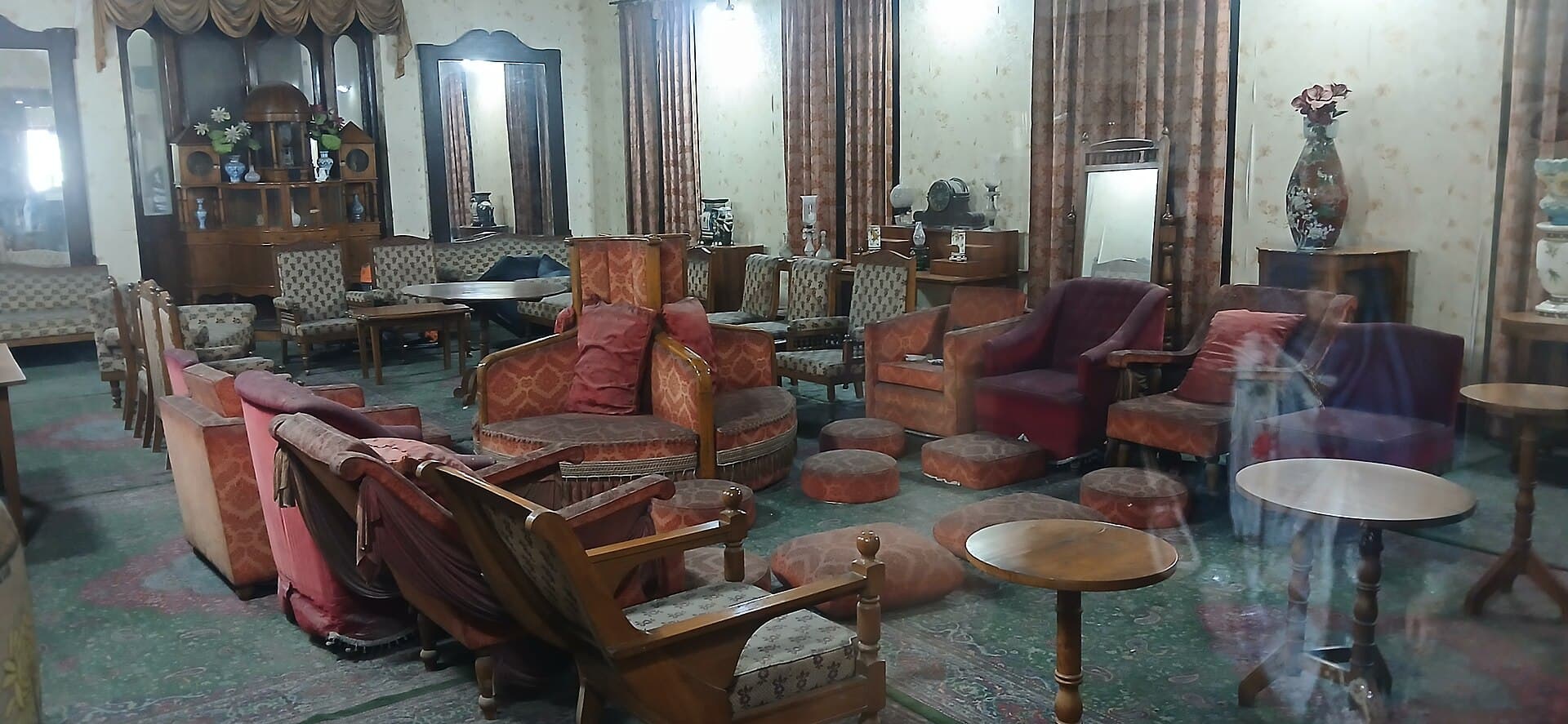
Twenty-three of the rooms are open. The furniture, the chandeliers, the nawabs’ dinner service and an elephant skull in the hallway all survive, and the photographs on the walls are the real draw — Dhaka in the 1870s and 1880s, when the Buriganga was still a working river and this was the grandest house on it. The first general meeting of the All-India Muslim League happened here in 1906, which is the sort of thing the guides mention in passing.
Go in the morning. By noon the riverfront lawn is full and the light on the pink facade is flat.
Lalbagh Fort and the mosque of Khan Mohammad Mridha
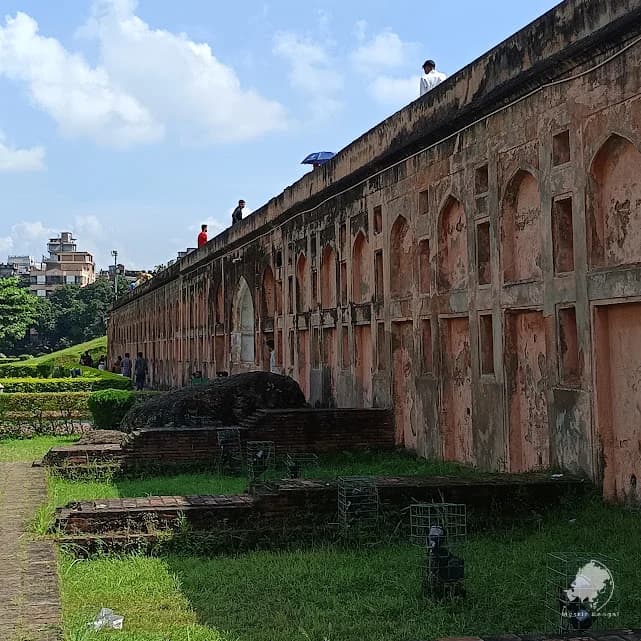
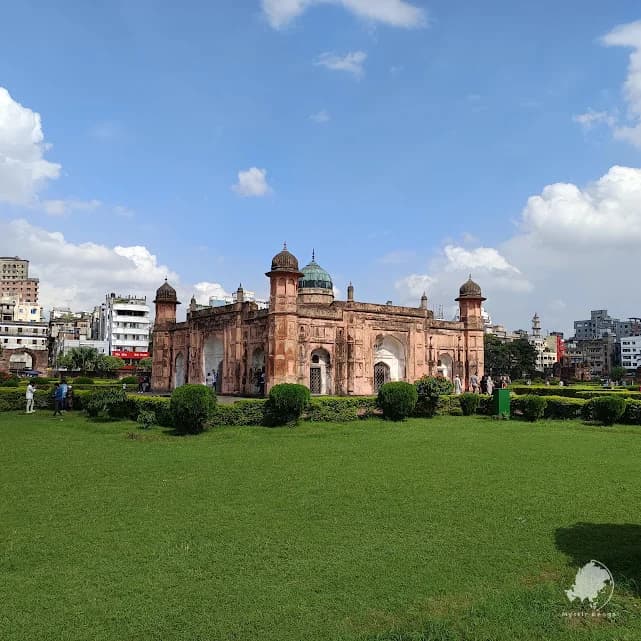
Lalbagh was never finished. Prince Muhammad Azam started it in 1678, was recalled to Delhi a year later, and his successor Shaista Khan carried on until his daughter Pari Bibi died inside the walls in 1684. He read it as a bad omen and stopped. So what you walk around today is three buildings and a garden inside a curtain wall — the Diwan-i-Am with its hammam, the small three-domed mosque, and Pari Bibi’s tomb, which is faced in black basalt and white marble and is the finest thing on the site.
The garden is the other reason people come. It is one of the few genuinely quiet green spaces in central Dhaka, and on Friday afternoons half the neighbourhood is sitting in it. There is a small museum in the Diwan-i-Am with Mughal weapons, coins and calligraphy.
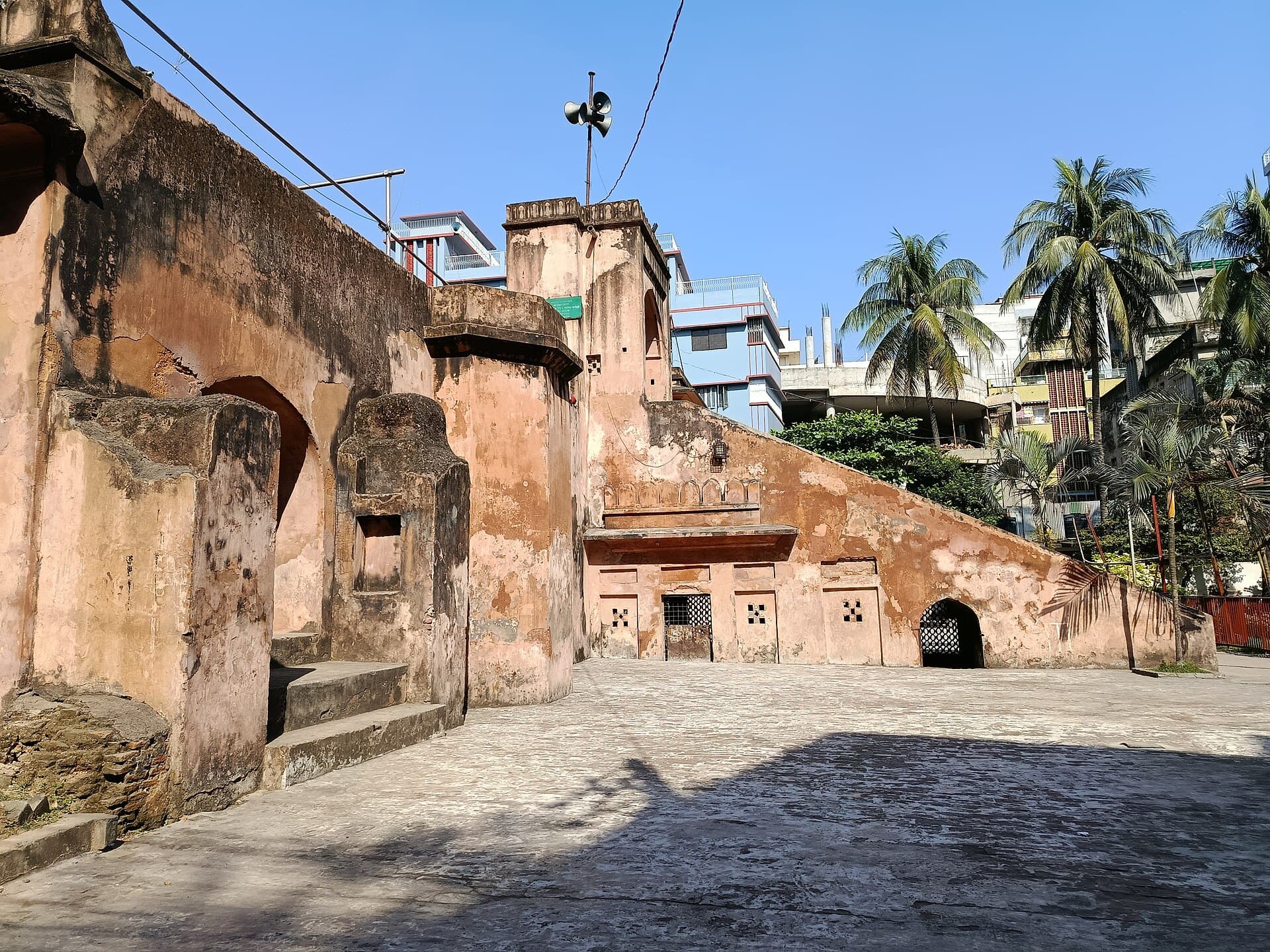
Ten minutes away, down lanes that get progressively narrower, is the Khan Mohammad Mridha Mosque of 1704–05 — three domes on a raised brick platform, reached by a flight of steps, with the ground floor given over to rooms that were once lodgings. Almost nobody visits. It is still in daily use, and the caretaker will usually let you up onto the platform between prayers.
Star Mosque and the Armenian Church, Armanitola
Star Mosque — Tara Masjid — started life as a plain Mughal-style prayer hall in the early 1800s. Then in the 1930s a local businessman, Ali Jan Bepari, paid to have the whole thing surfaced in chinitikri: broken china and glass set into plaster. Hundreds of blue stars cover the domes and walls, and if you look closely at the panels you will find Mount Fuji, over and over, cut out of imported Japanese crockery. Nobody has ever fully explained why.
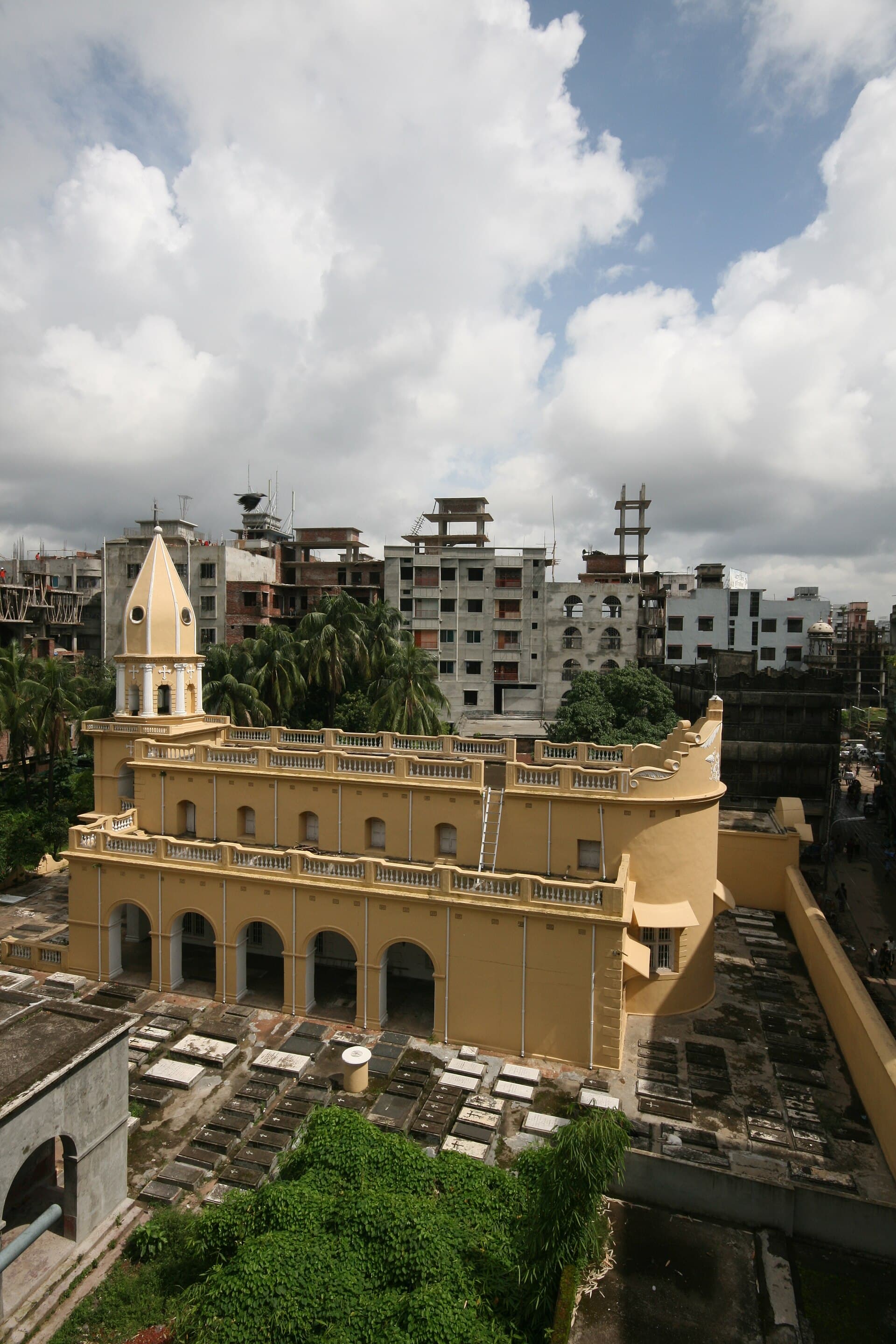
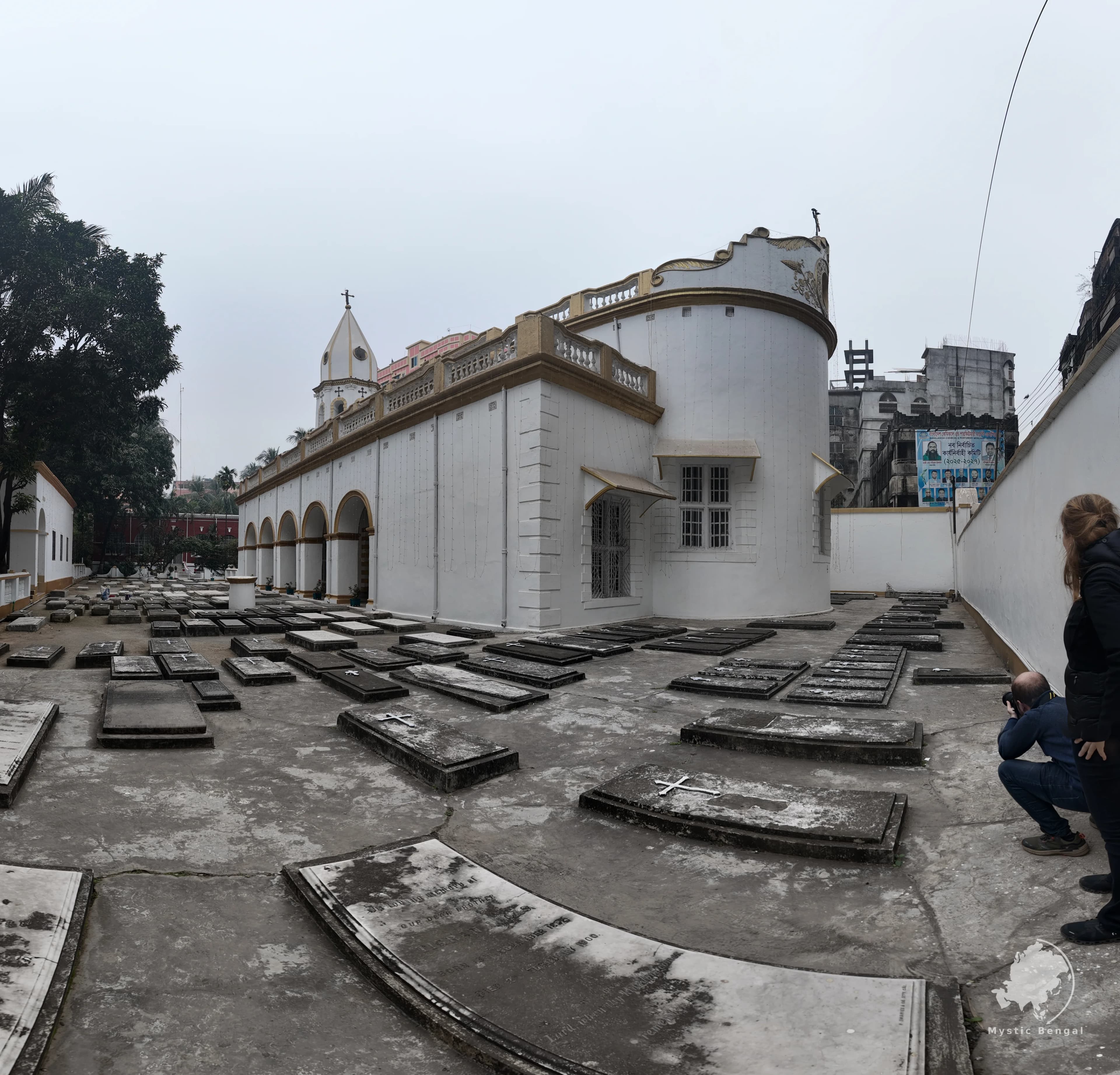
Ten minutes north, behind a gate that is easy to walk past, is the Armenian Church of the Holy Resurrection, built in 1781. Armenian traders ran much of the jute and leather business out of Dhaka in the 18th and 19th centuries, and this was their church. The community is gone — the last Armenian resident died in 2020 — but the building is kept up, and the graveyard around it holds several hundred headstones in Armenian script.
It is the quietest corner of Old Dhaka by a distance. Ring the bell at the gate; the caretaker will let you in and, if he has time, walk you round the graves.
Dhakeshwari Temple
Dhakeshwari is the national temple of Bangladesh and, by most accounts, the reason the city is called Dhaka. The story goes that a Sena king found an image of the goddess hidden in the jungle here in the 12th century and built a temple over it — Dhakeshwari means "hidden goddess". The original image was taken to India in 1947 and has never come back; the one in the shrine now is a replica.
The complex is bigger than it looks from the road: the main temple, four Shiva temples in a row at the front, and a courtyard that fills up completely during Durga Puja in autumn. Outside festival season it is calm, and visitors of any faith are welcome. Take your shoes off at the steps.
Sadarghat and the National Museum
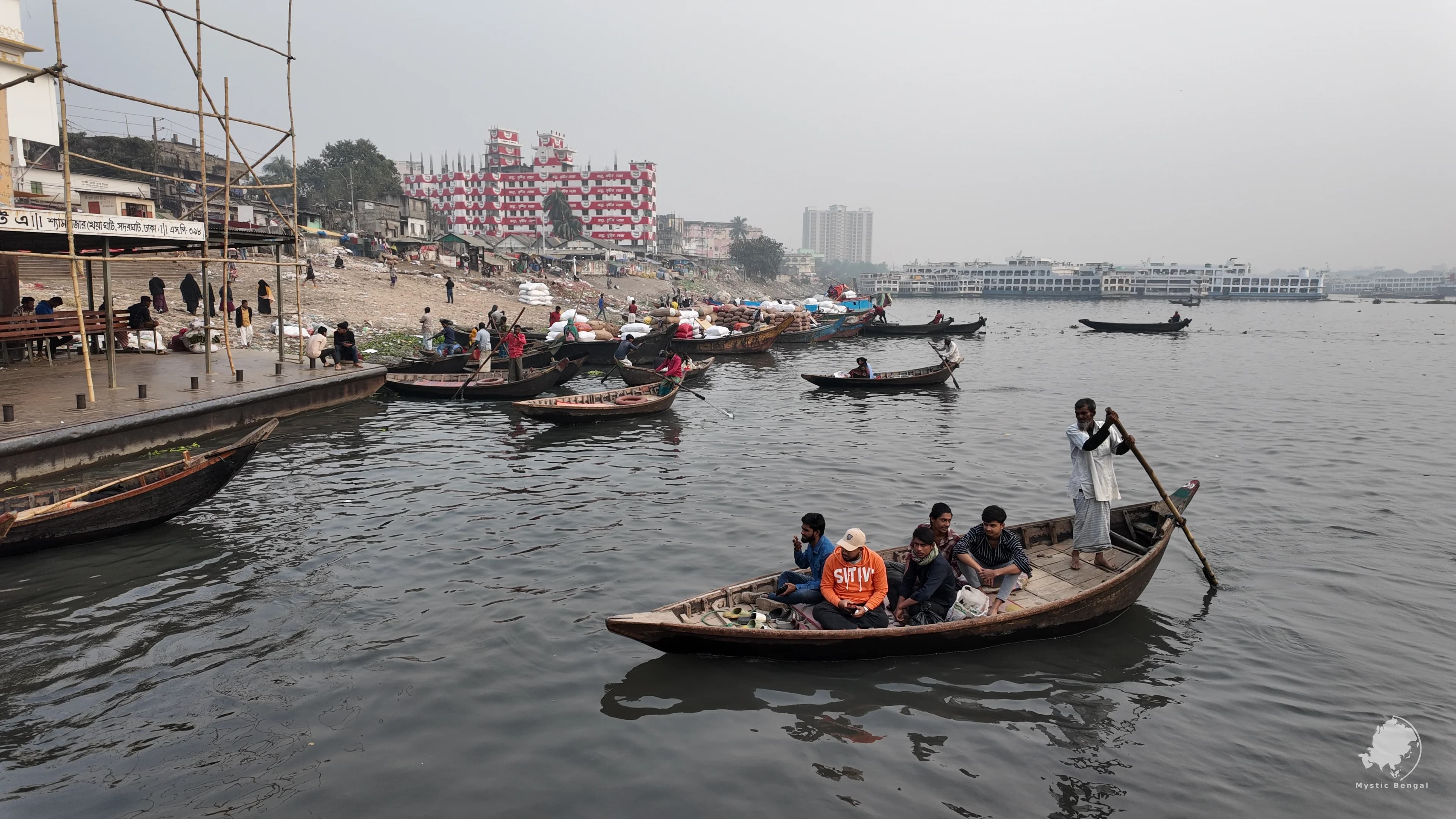
Sadarghat is not a monument, it is a working river port, and it is the best hour you will spend in Dhaka. Several thousand people a day leave from here on triple-decker launches bound for Barishal, Bhola and the southern delta, and the terminal runs at full pitch from before dawn. Buy a platform ticket, walk the jetties, and hire a small rowing boat for twenty or thirty minutes to see the whole thing from the water — that is the view worth having.
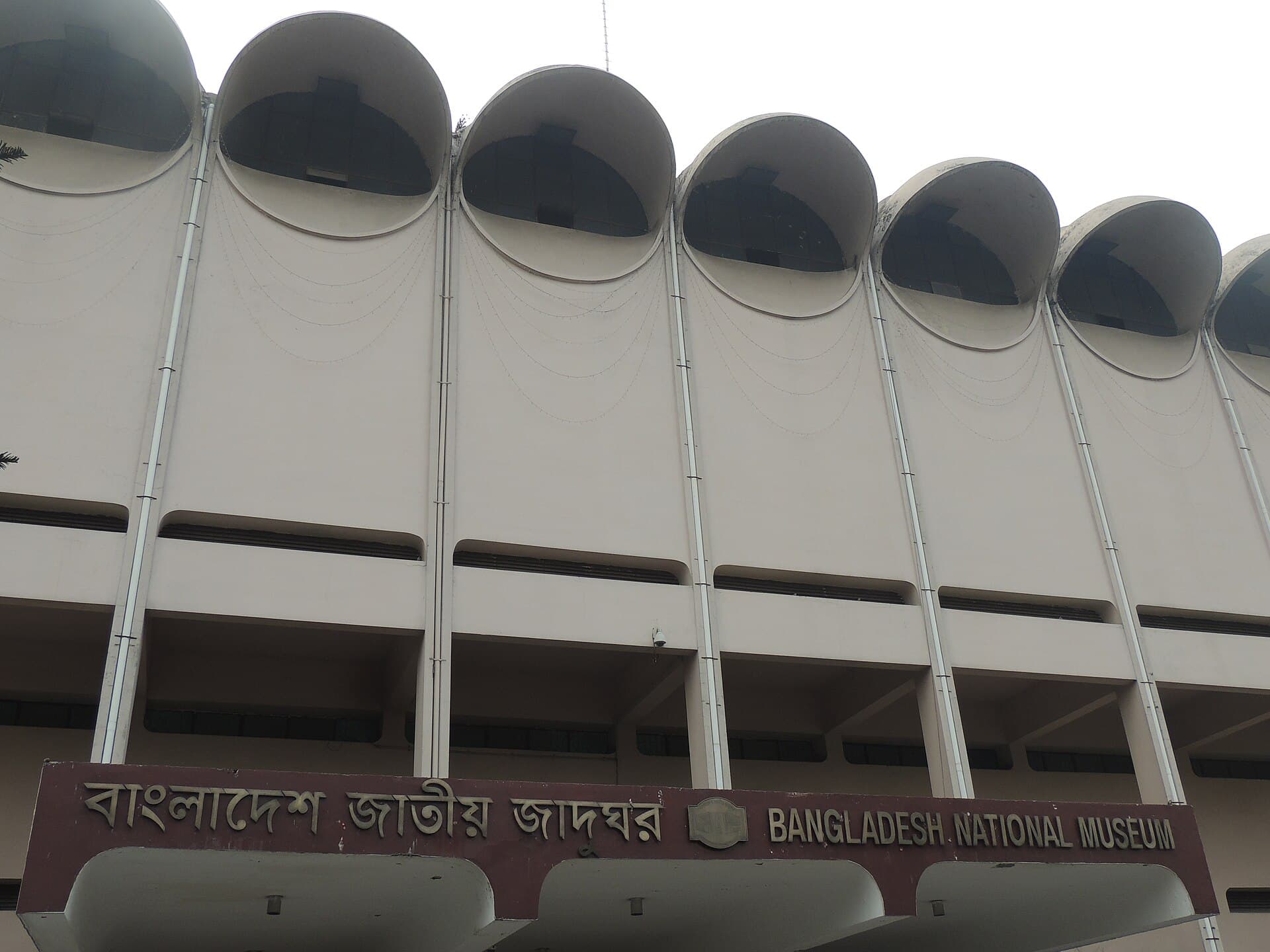
Then go north to Shahbagh for the Bangladesh National Museum, which is the largest in South Asia and needs a good three hours. Forty-odd galleries over four floors: Pala and Sena stone sculpture, Mughal manuscripts, folk art, natural history, and a Liberation War section on the top floor that is difficult and worth doing properly. Everything is labelled in English.
If the museum leaves you wanting more of 1971, the Liberation War Museum at Agargaon is a separate building and a separate afternoon.
Historic Dhaka in pictures

Things to do in Historic Dhaka
Ahsan Manzil
The nawabs’ riverside palace, restored and open as a museum. Twenty-three rooms, original furniture, and photographs of Dhaka from the 1870s.
Lalbagh Fort
An unfinished Mughal fort of 1678 with Pari Bibi’s marble tomb at its centre, and the best garden in central Dhaka.
Khan Mohammad Mridha Mosque
A 1704 mosque raised on a brick platform, ten minutes from Lalbagh and almost never on anyone’s itinerary.
Star Mosque
Domes and walls covered in blue stars made from broken china, with Mount Fuji hiding in the tilework.
Armenian Church of the Holy Resurrection
Built 1781 by Dhaka’s Armenian traders. The community has gone; the church and its graveyard remain.
Dhakeshwari Temple
The national temple and the likely source of the city’s name, busiest and most photogenic during Durga Puja.
Sadarghat at sunrise
Hire a rowing boat off the jetty and watch the southbound launches load. Go before 8am.
Bangladesh National Museum
Four floors covering sculpture, manuscripts, folk art and the Liberation War. Three hours minimum.
Shakhari Bazar
A single narrow lane of Hindu artisan houses between Ahsan Manzil and Dhakeshwari — the oldest street frontage left in the city.
Best time to visit
November to February. Dhaka is dry and mild then, and since almost all of this is done walking outdoors, the season makes a real difference.
Ideal months
When to avoid: April to June, when the city sits above 35°C with high humidity, and the height of the monsoon in July and August, when the old city lanes flood after heavy rain.
- Air quality is at its worst from December to February. If you are asthmatic, bring a mask.
- Friday afternoons are quiet on the roads but mosques close to visitors around midday prayers.
- Durga Puja, usually October, fills Dhakeshwari and Shakhari Bazar and is the best week of the year to be in Old Dhaka.
How to get there
Arriving in Dhaka
Hazrat Shahjalal International Airport is 20 km north of the old city. Allow well over an hour by road at almost any time of day.
Getting to Old Dhaka
From Gulshan or Banani, budget 60 to 90 minutes by car. The MRT metro reaches Motijheel, which shortens the journey considerably in rush hour.
Between the sites
Rickshaw. The lanes around Armanitola and Shakhari Bazar are too narrow for cars, and a rickshaw covers Ahsan Manzil to Star Mosque in fifteen minutes.
To Shahbagh and the National Museum
CNG auto-rickshaw or metro from the old city; about 30 minutes outside peak hours.
On the river
Small rowing boats cross the Buriganga from Sadarghat for a few taka, and can be hired by the half hour.
Travel tips
- Start early. Old Dhaka before 9am is a different, far more pleasant city.
- Carry small notes. Rickshaws, boatmen and site tickets all need change, and nobody has any.
- Agree the rickshaw fare before you get in.
- Dress modestly for the mosques and the temple — covered shoulders and knees, and a scarf for women at Star Mosque. Shoes come off at the door.
- Non-Muslim visitors are usually asked to stay outside prayer halls during namaz. Wait ten minutes and you will be welcomed in.
- Lalbagh, Ahsan Manzil and the National Museum all close one weekday and charge foreign visitors more than locals. Check the day before.
- Sadarghat is crowded and the jetty edges are unguarded. Watch your footing and your bag.
- Hire a local guide for the old city. The interesting doorways are the ones you would walk straight past.
Nearby attractions
Sonargaon & Panam City
1.5 hours by road
The abandoned merchant street of the old Bengal capital, an easy day trip east of Dhaka.
Read the guidePaharpur & Mahasthangarh
5–6 hours north
The UNESCO monastery at Paharpur and the oldest city site in the country.
Read the guideLiberation War Museum, Agargaon
40 minutes from Old Dhaka
The fullest account of 1971 anywhere in Bangladesh, in a purpose-built museum.
Historical Sites of Rajshahi
5 hours by train
Sultanate mosques and the Puthia temple town, out west.
Read the guideHistoric Dhaka: common questions
How many days do I need in Dhaka?
Two is enough for everything on this page — one day for Old Dhaka on foot, one for Shahbagh and the National Museum. Three if you want to add Sonargaon or the Liberation War Museum without rushing.
Is Old Dhaka safe for tourists?
Yes. Petty theft in crowds is the realistic risk, not anything worse. Keep your phone and wallet in a front pocket at Sadarghat and in the bazaar lanes, agree fares before you ride, and you will be fine. Foreign visitors attract friendly curiosity more than anything else.
Can non-Muslims visit Star Mosque and the Khan Mohammad Mridha Mosque?
Yes, outside prayer times. Dress modestly, take your shoes off, and ask the caretaker before going into the prayer hall. Women should cover their hair. If you turn up during namaz, wait — you will usually be invited in afterwards.
What is the best way to get around Old Dhaka?
Rickshaw, and your own feet. Cars cannot fit down most of the lanes and get stuck in traffic on the ones they can. Keep the car for the run between your hotel and the old city, then leave it.
When does Ahsan Manzil open?
It runs as a government museum with a weekly closing day and reduced hours on Fridays, and foreign visitors pay a higher ticket price than Bangladeshi nationals. Timings change, so check the current schedule before you go rather than turning up cold.
Is Sadarghat worth visiting?
It is the single best hour in Dhaka if you like watching a city work. Several thousand people a day board launches to the southern delta from here, and a thirty minute rowing boat out into the Buriganga gives you the whole scene. Go at sunrise; by mid-morning it has thinned out.
Why is it called Dhakeshwari Temple?
Dhakeshwari means "hidden goddess", from the legend that the temple’s original image was found concealed in the jungle on this spot in the 12th century. Most historians think the city took its name from the temple rather than the other way round.
Where to go next

Rajshahi Division
Paharpur & Mahasthangarh
The largest Buddhist monastery south of the Himalayas and the oldest city site in Bangladesh, an hour apart in the northern plains. One UNESCO World Heritage Site, one 2,500 year old capital, both doable in two days from Bogura.

Rajshahi Division
Historical Sites of Rajshahi
Sultanate stone mosques and Bengal’s densest temple town, strung along one route through Rajshahi, Naogaon, Natore and Chapai Nawabganj. Choto Sona, Darasbari, Kusumba, Puthia and the Dighapatia palace in three unhurried days.

Dhaka Division
Sonargaon & Panam City
A medieval capital an hour from Dhaka, where a single street of abandoned merchant mansions has been left to the banyan trees.
Travel to Historic Dhaka with a local team
We handle permits, transport, guides and the timing that makes the difference between a good trip and a wasted one.
Sources and further reading
- Ahsan Manzil — Wikipedia
- Lalbagh Fort — Wikipedia
- Bangladesh National Museum — Wikipedia