
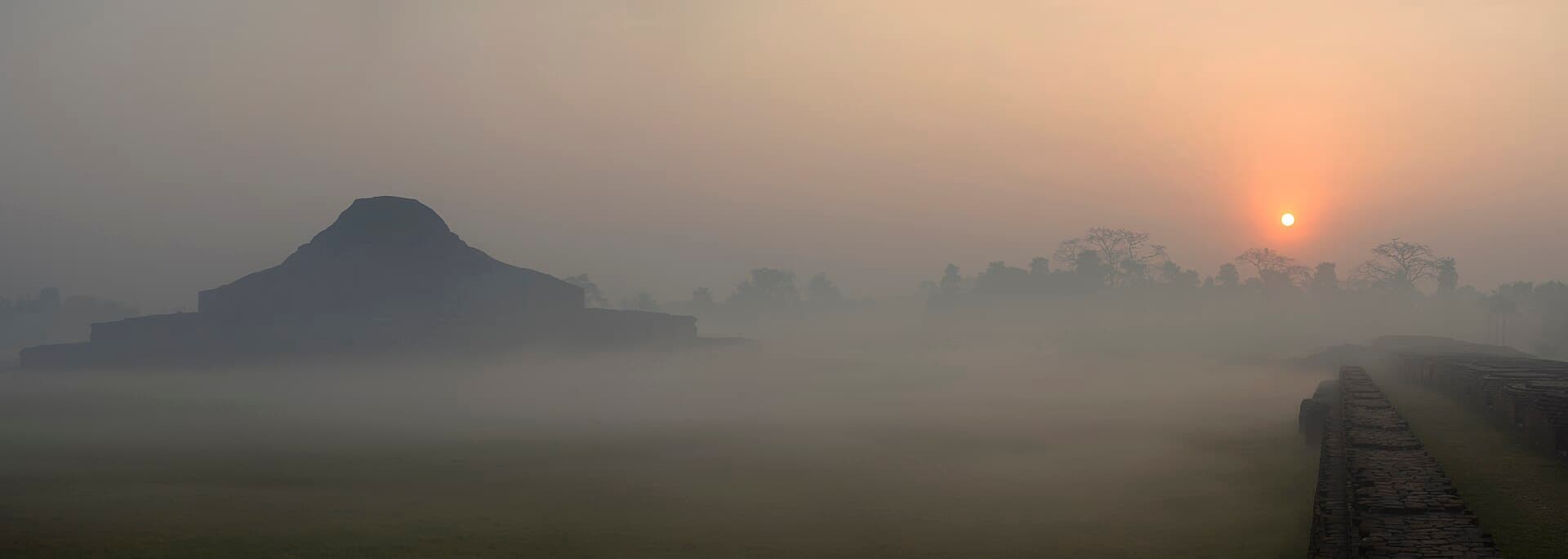
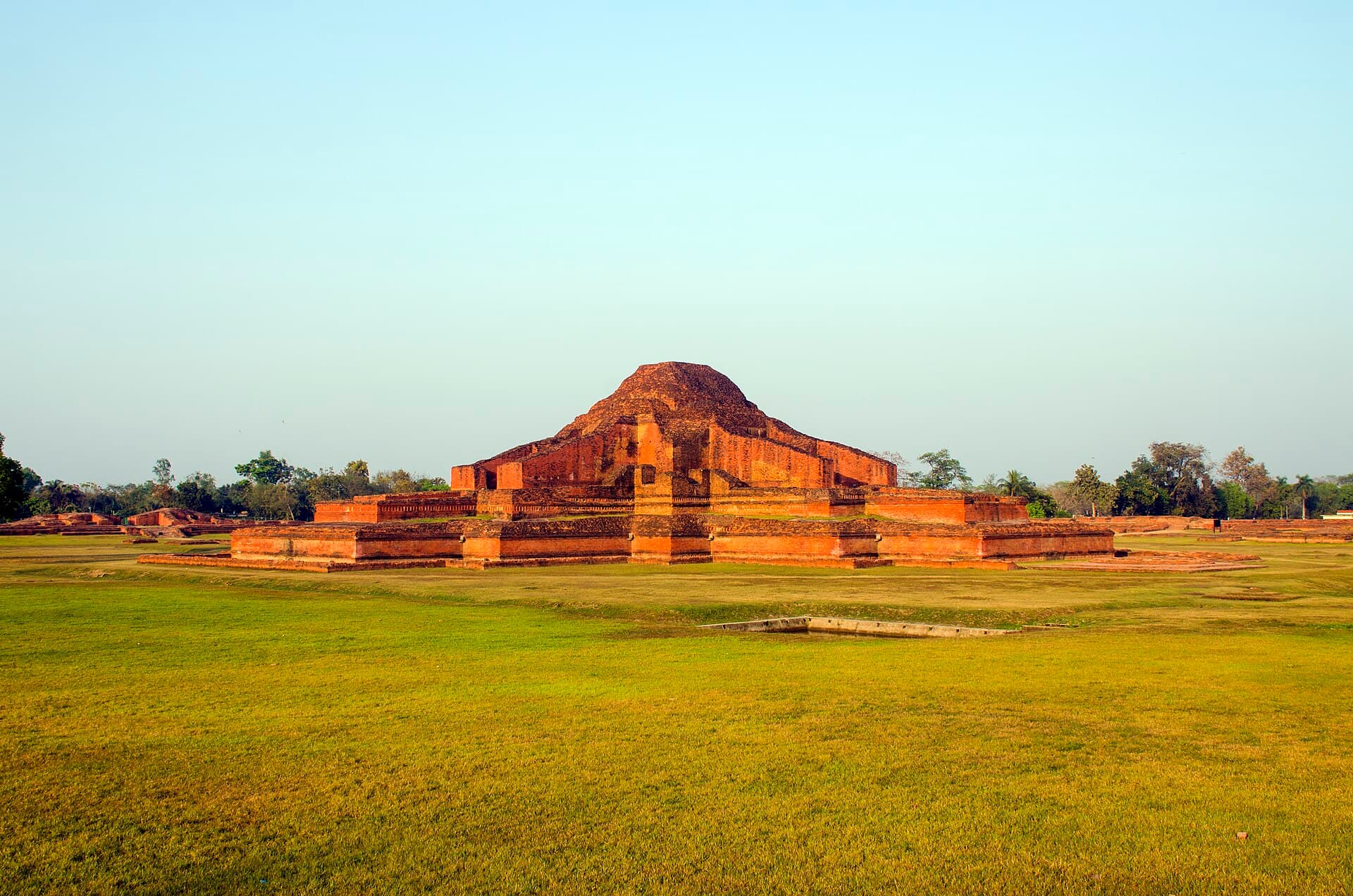
Northern Bangladesh holds the two oldest things you can stand on in the country. Somapura Mahavihara at Paharpur, in Naogaon district, was the largest Buddhist monastery south of the Himalayas — a 21 acre quadrangle of 177 monk cells around a cruciform temple that still rises 21 metres out of the paddy. Mahasthangarh, an hour north-east in Bogura district, is the fortified city of Pundranagar, occupied from roughly the 3rd century BCE and the earliest urban site yet found in Bangladesh.
Together they cover eighteen centuries of Bengali history in a landscape most visitors drive straight past on the way to somewhere else. Paharpur has been on the UNESCO World Heritage List since 1985; Mahasthangarh sits on the tentative list and was named SAARC Cultural Capital in 2016. Both are open, both have site museums, and both are quiet enough that you will often have the ruins to yourself.
Somapura Mahavihara: the monastery at Paharpur
Dharmapala, the second Pala king, founded Somapura Mahavihara at the end of the 8th century. At its height it housed several hundred monks and drew scholars from Tibet, Nepal, Myanmar and Java — Atisha Dipankara, who later reformed Tibetan Buddhism, studied and taught here. It stayed active for around four hundred years before slipping into abandonment in the 12th century.
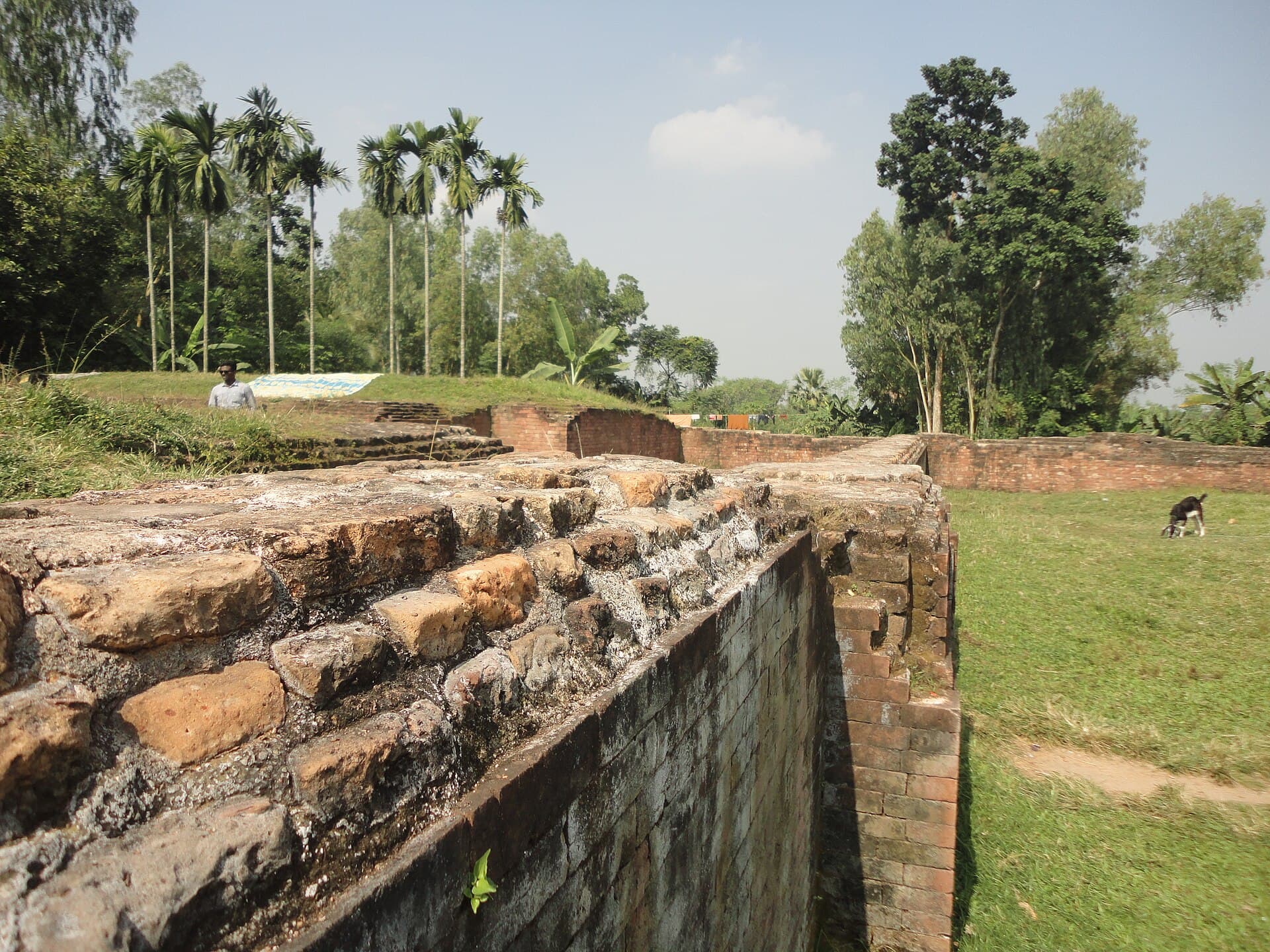
What survives is the ground plan, and it is the ground plan that makes the site remarkable. A square courtyard 281 metres on each side is enclosed by 177 monastic cells, with the temple in the centre rising in three diminishing terraces. UNESCO lists it partly because that cruciform plan was copied across Southeast Asia — the architectural line runs from here to Bagan in Myanmar and on to Borobudur in Java.
Terracotta is the other reason to come. More than two thousand plaques are set into the temple base, showing dancers, musicians, animals, deities and scenes of ordinary Pala-era life. They are folk art, not court art, and they repay slow walking.
Mahasthangarh: the oldest city in Bangladesh
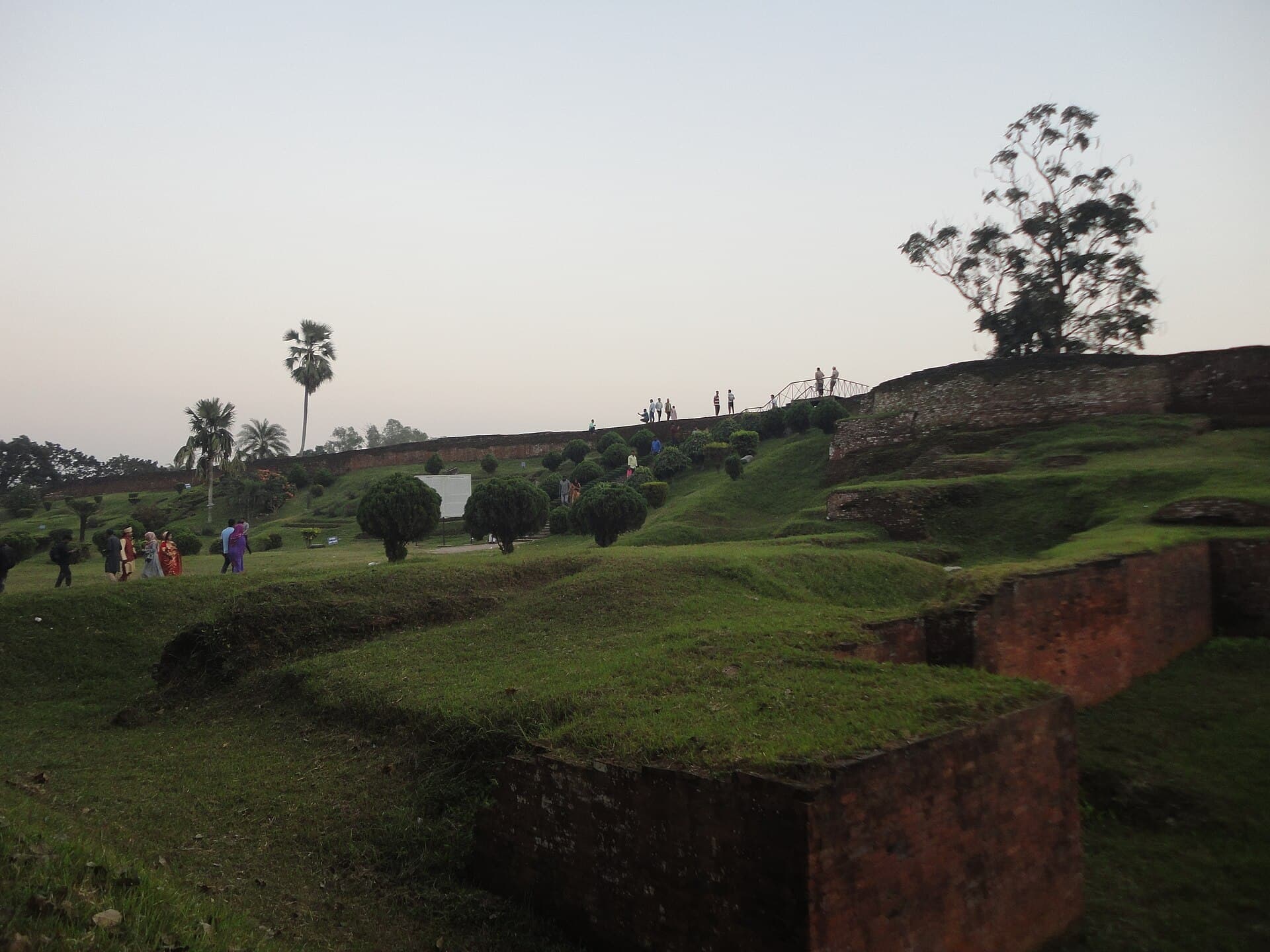
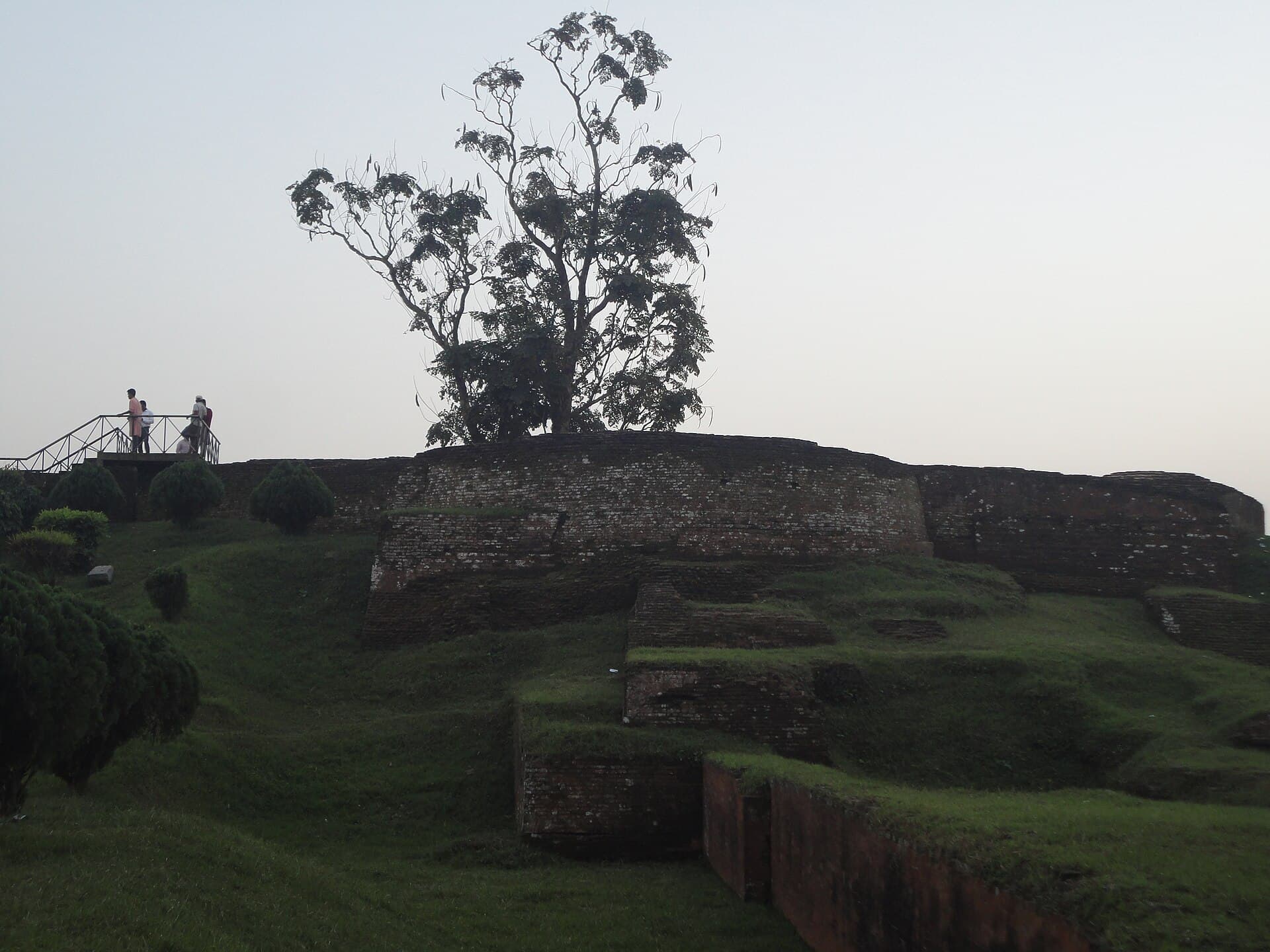
Mahasthangarh was Pundranagar, capital of the Pundra region, and the Brahmi-script Mahasthan stone slab found here dates the settlement to at least the 3rd century BCE — Mauryan times. The citadel is a rectangular mound about 1.5 kilometres long and 1.4 kilometres wide, raised well above the floodplain and wrapped in brick ramparts that were rebuilt by Mauryas, Guptas, Palas and Senas in turn.
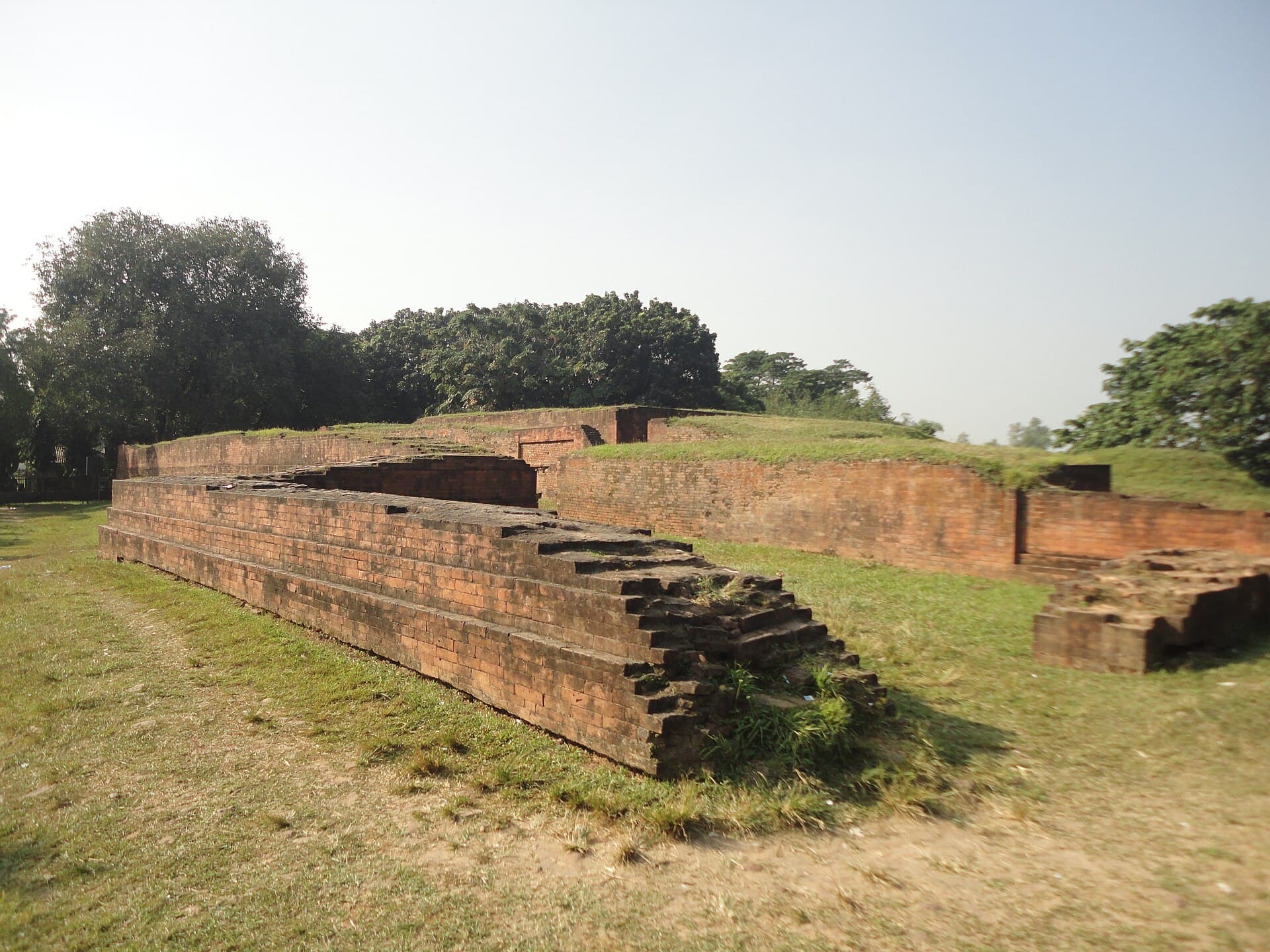
The site spreads far beyond the walls. Govinda Bhita temple sits just outside the northern gate, Khodar Pathar Bhita and Mankalir Kunda lie within, and Behular Bashor Ghar and Gokul Medh are a short drive south at Gokul. The Mahasthangarh Site Museum holds the terracotta, coins, ornaments and inscriptions pulled out of all of them.
Unlike Paharpur, this is a living landscape. The shrine of Shah Sultan Balkhi Mahisawar, the 13th century saint credited with bringing Islam to the region, still draws pilgrims to the same mound, and the Karatoya river below is a place of Hindu pilgrimage. You are walking through an active religious site, not just an excavation.
How the two fit into one trip
Bogura is the practical base: it has the best hotels in the region, sits on the main northern highway, and puts Mahasthangarh 13 kilometres up the road and Paharpur about two and a half hours west. Two nights is comfortable — one full day for each site, with the museums included.
If you are coming from Dhaka with only a weekend, drive up on Friday morning, take Mahasthangarh that afternoon, do Paharpur on Saturday and return the same evening. Adding Kusumba Mosque and the Rajshahi temple towns on the way back turns it into a four day loop through the whole of northern Bengal.
- Bogura to Mahasthangarh: 13 km, about 30 minutes
- Bogura to Paharpur: roughly 100 km, 2.5 hours by road
- Paharpur to Kusumba Mosque: about 1.5 hours, an easy add-on
- Both sites close one day a week and shut for lunch — check before you set out
Paharpur & Mahasthangarh in pictures
Things to do in Paharpur & Mahasthangarh
Circle the Paharpur courtyard
Walk the full 281 metre side of the quadrangle at ground level before climbing the temple terraces — the scale only registers from below.
Read the terracotta plaques
The lower band of the central temple is a running catalogue of 8th century Bengali life: wrestlers, dancers, elephants, cooking pots and gods, all in fired clay.
Paharpur Site Museum
Small but well kept, holding the sculpture, coins and inscribed copper plates excavated from the monastery since 1923.
Climb the Mahasthangarh ramparts
The eastern wall above the Karatoya gives the clearest sense of why a city was built on this mound and defended for 1,500 years.
Govinda Bhita and Gokul Medh
Two outlying temple mounds — Gokul Medh, known locally as Behular Bashor Ghar, is a terraced structure of 172 chambers.
Mahasthangarh Site Museum
Home to the Mahasthan Brahmi inscription, the single object that fixes the site in the Mauryan period.
Buy Bogura’s doi
The sweet yoghurt from Bogura is the most famous in Bangladesh and is sold in clay pots all along the Mahasthangarh road.
Best time to visit
October to March. Northern Bangladesh is dry and cool then, and the open ruins have almost no shade — which makes April and May punishing.
Ideal months
When to avoid: April to June, when temperatures on the exposed brick regularly pass 38°C, and July to September, when heavy rain makes the unpaved paths at Mahasthangarh awkward.
- December and January mornings can be genuinely foggy in the north — start after 9am for photographs.
- Both sites are largely open ground; a hat, water and sunscreen matter more here than at most Bangladeshi sites.
How to get there
Dhaka to Bogura by road5–6 hours
Air-conditioned coach on the northern highway via Jamuna Bridge. The usual approach and the simplest.
Dhaka to Bogura by train6–7 hours
Intercity services run to Santahar or Bogura; Santahar is convenient if you plan to reach Paharpur first.
Bogura to Mahasthangarh30 minutes
Local bus, CNG auto-rickshaw or a hired car straight up the Rangpur road.
Bogura to Paharpur2.5 hours
Hired car via Naogaon or Jaypurhat. Public transport works but involves two changes and doubles the journey.
By air1 hour flight + 2–3 hours road
Fly Dhaka to Saidpur or Rajshahi, then drive. Worth it only if you are combining the north with a Rajshahi loop.
Travel tips
- Both sites charge a modest entry fee, higher for foreign visitors; carry small notes as change is scarce.
- Government archaeological sites in Bangladesh usually close one weekday and pause over lunch — confirm the day before travelling.
- Hire a guide at the Paharpur gate. The terracotta plaques mean very little without someone to read them.
- Mahasthangarh is a working pilgrimage site as well as a ruin; dress modestly and ask before photographing people at the shrine.
- There is little shade and no cafe inside either site. Bring water.
- Drones are not permitted over archaeological sites without written permission from the Department of Archaeology.
Nearby attractions
Kusumba Mosque
1.5 hours from Paharpur
A 1558 stone mosque in Naogaon, roughly halfway between Paharpur and Rajshahi.
Read the guidePuthia temple complex
2.5 hours from Bogura
The densest cluster of Hindu temples in Bangladesh, on the Rajshahi road.
Read the guideUttara Gano Bhaban, Natore
1.5 hours from Bogura
The Dighapatia palace and its gardens, an easy stop on the way south.
Read the guideSonargaon and Panam City
A long day from Bogura
The other great historic capital, on the opposite side of Dhaka.
Read the guidePaharpur & Mahasthangarh: common questions
Is Paharpur worth visiting?
Yes, if you have any interest in archaeology or Buddhist history. Somapura Mahavihara was the largest monastery south of the Himalayas, its cruciform temple plan influenced Bagan and Borobudur, and it has been a UNESCO World Heritage Site since 1985. It is ruins rather than standing buildings, so come for the scale and the terracotta rather than for intact architecture.
How old is Mahasthangarh?
The Mahasthan Brahmi inscription found at the site dates occupation to at least the 3rd century BCE, in the Mauryan period, which makes it the oldest known urban settlement in Bangladesh. The citadel stayed in use through the Gupta, Pala and Sena periods and into the Muslim era, so what you see is roughly 1,800 years of continuous rebuilding.
Can I visit Paharpur and Mahasthangarh in one day?
It is possible but rushed — they are about two and a half hours apart by road. Two days based in Bogura is far better, giving a full day and the site museum at each. A single-day dash from Dhaka is not realistic; the drive alone is five to six hours each way.
What is the entry fee?
Both are Department of Archaeology sites with a small entry fee, charged at a higher rate for foreign visitors than for Bangladeshi nationals. Fees are payable in cash at the gate and there are no card facilities.
Where should I stay?
Bogura has the best hotel options in northern Bangladesh and works as a base for both sites. Naogaon and Jaypurhat have simpler accommodation closer to Paharpur if you want an early start at the monastery.
What is the best time of year to go?
November to February. The northern plains are dry and cool, and since both sites are open ground with almost no shade, the pre-monsoon heat of April and May is genuinely difficult.
Where to go next

Rajshahi Division
Historical Sites of Rajshahi
Sultanate stone mosques and Bengal’s densest temple town, strung along one route through Rajshahi, Naogaon, Natore and Chapai Nawabganj. Choto Sona, Darasbari, Kusumba, Puthia and the Dighapatia palace in three unhurried days.

Dhaka Division
Sonargaon & Panam City
A medieval capital an hour from Dhaka, where a single street of abandoned merchant mansions has been left to the banyan trees.
Khulna Division
The Sundarbans
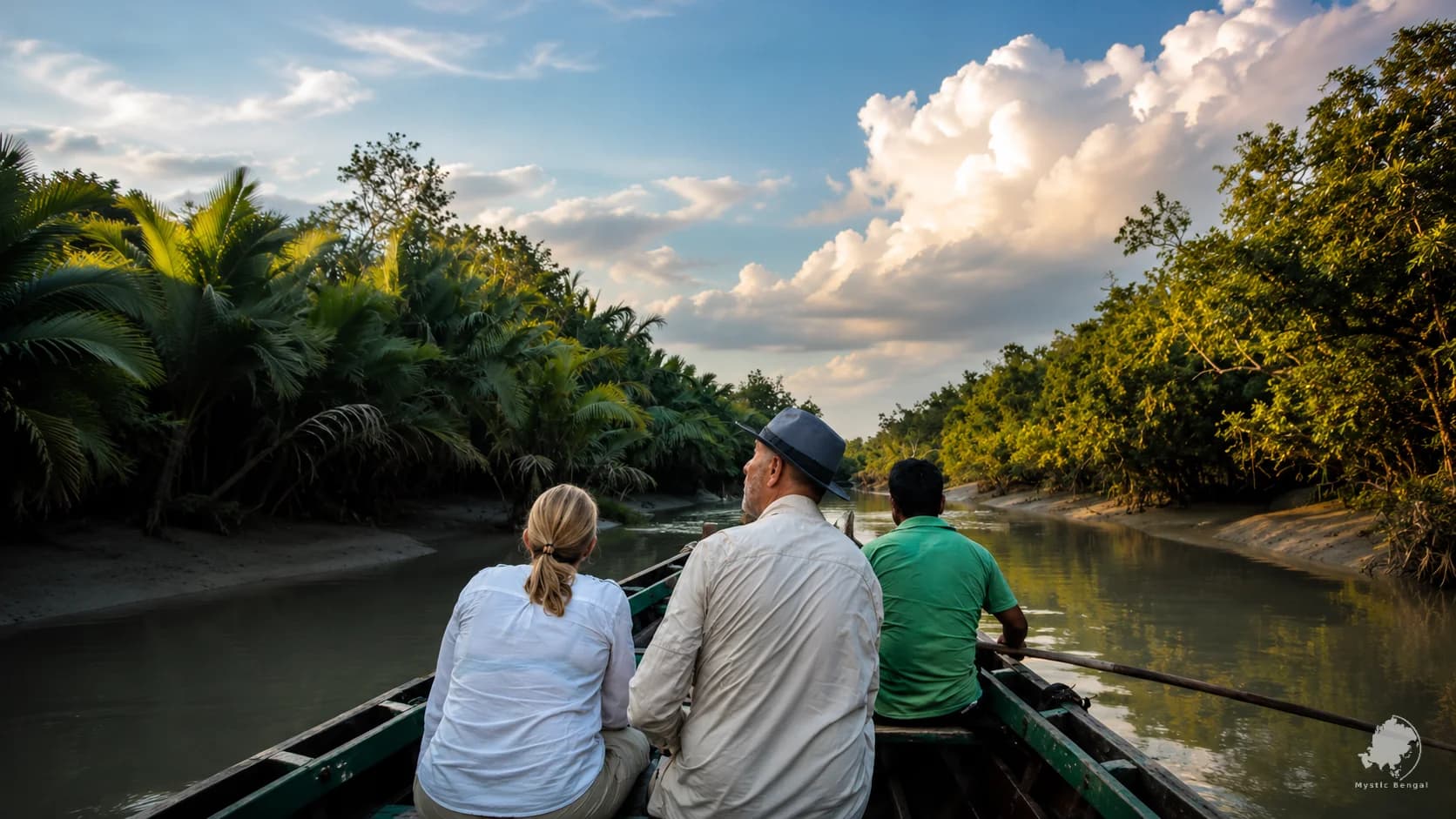
The largest mangrove forest on earth, and the only one where tigers swim between islands. Three nights on a live-aboard boat is the way to see it.
Travel to Paharpur & Mahasthangarh with a local team
We handle permits, transport, guides and the timing that makes the difference between a good trip and a wasted one.
Sources and further reading
- Ruins of the Buddhist Vihara at Paharpur — World Heritage List — UNESCO World Heritage Centre
- Somapura Mahavihara — Wikipedia
- Mahasthangarh — Wikipedia